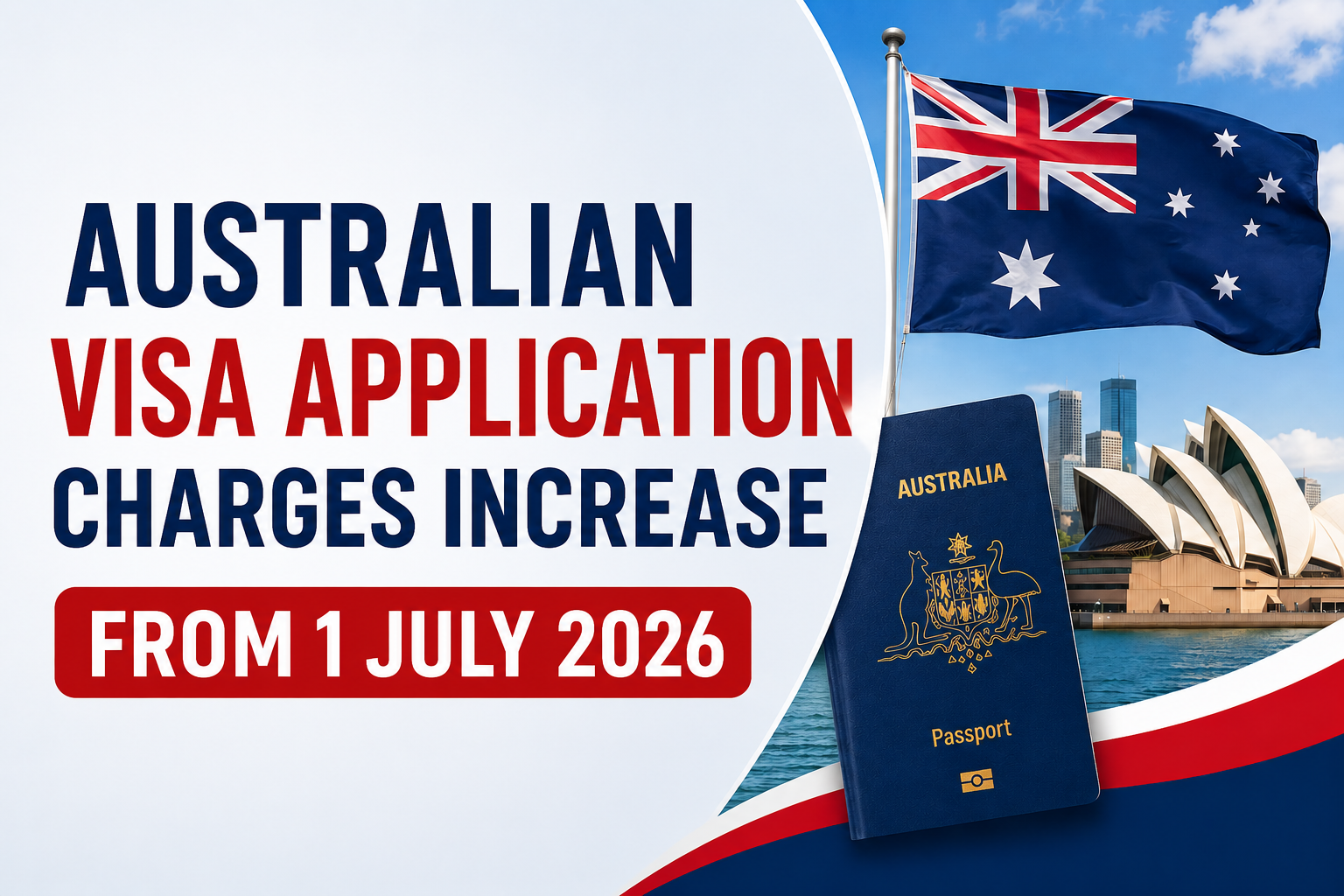
IMPORTANT NOTICE
You’re probably not just asking, “What’s the visa fee?” You’re trying to work out the real cost of visiting Australia without getting caught by extras after you’ve already planned flights, time off work, or a family trip.
That’s the right question to ask.
With australia visitor visa fees, the government charge is only one part of the picture. Many applicants budget for the visa itself, then discover separate costs for biometrics, translations, insurance, medicals, payment surcharges, or professional help. Those extra costs don’t affect every applicant in the same way, which is why fee guides can feel inconsistent.
One important note before you rely on any figure in this article. Visa charges can change, and your personal circumstances can change how much you pay. Always check the Department’s current pricing at Home Affairs and book an appointment with a migration agent for updated advice, because information may no longer be correct by the time you read this.**
Your Guide to Australian Visitor Visas and Their Base Fees
The term “tourist visa” is often used loosely, but Australia has several visitor options. The first step is identifying which visa product applies to you. If you choose the wrong category, your budget can be off from the start.
The main visitor visa options
For many travellers, the key options are:
- Visitor visa under Subclass 600, commonly used for tourism, family visits, or certain short stays.
- Electronic Travel Authority under Subclass 601, available only to eligible passport holders.
- eVisitor under Subclass 651, also limited to eligible nationalities.
The most commonly discussed fee is the Subclass 600 Tourist stream charge. As of 2026, the base application fee is AUD 200 for offshore applications according to Edvise Hub’s 2026 visitor visa fee summary. That same source also notes that onshore applications are AUD 500.
If you’re comparing visitor pathways, this quick table helps.
Australia Visitor Visa Base Fees 2026
| Visa Type | Subclass | Application Location | Base Fee (AUD) |
|---|---|---|---|
| Visitor visa, Tourist stream | 600 | Offshore | AUD 200 |
| Visitor visa, Tourist stream | 600 | Onshore | AUD 500 |
| Electronic Travel Authority | 601 | Varies by eligibility | Qualitative only |
| eVisitor | 651 | Varies by eligibility | Qualitative only |
I’ve kept the ETA and eVisitor rows qualitative because this article only cites fees that are verified in the approved data set for this piece. That matters. A careful fee guide is better than a broad one filled with guesses.
Why this base fee matters
The base government charge is your starting point. It tells you what the Department expects before it even looks at other parts of your case.
That’s useful if you’re planning a reconnaissance trip before study, skilled migration, or family applications. If your long term plans involve Australia, a short visit may be your first practical step. If that’s your situation, My Visa Guide’s page on the tourist visa gives a useful overview of where a visitor application sits in the wider migration journey.
Practical rule: treat the base fee as your entry line in the budget, not the final total.
One point that often confuses families
People often assume every visitor enters under the same visa label. They don’t. Your nationality, travel purpose, and where you apply from can change both the visa option and the cost structure.
That also matters for trip planning beyond the visa itself. For example, if you’re relocating temporarily with an animal companion, a separate planning stream applies. This guide to moving pets to Australia and associated costs is worth reading early because pet import arrangements sit completely outside your visa fee and can affect your travel timing.
Onshore vs Offshore Application Fees A Key Difference
One of the biggest pricing differences in australia visitor visa fees has nothing to do with your passport. It’s about where you are when you apply.

The fee gap in simple terms
For the Subclass 600 Tourist stream, the base fee in 2026 is AUD 200 offshore and AUD 500 onshore, as noted by Aussizz Group’s visitor visa fee guide.
That difference catches people off guard. Someone applying before travelling may pay one amount, while someone already in Australia and trying to extend or change their position may face a much higher base charge.
Why onshore costs more
The short answer is higher scrutiny and more departmental resources.
When a person lodges onshore, the Department has to consider their current stay, current visa conditions, and whether the new application fits with what they’ve already done in Australia. That doesn’t mean an onshore application is wrong. It means the application sits in a different compliance context.
In practical terms, onshore applicants often ask questions like:
- Can I stay longer for tourism
- Can I remain while visiting family
- Can I apply now that I’m already here
Those are valid questions. But the fee structure shows that the government places a higher administrative cost on these cases.
When offshore can be the cleaner option
If you haven’t travelled yet and you’re eligible to apply from outside Australia, offshore lodgement is often easier to budget for. You know the base fee earlier, and your travel plans can be built around the visa timeline.
For some eligible travellers, another path may be the ETA rather than Subclass 600. If you’re comparing those options, My Visa Guide has a helpful page on the Electronic Travel Authority Subclass 601.
Onshore and offshore aren’t just location labels. They affect cost, planning, and the way your application is assessed.
The budgeting mistake to avoid
Don’t assume you can enter Australia first and sort the visa later at the same cost. That assumption can create a gap in your budget immediately.
A better approach is to decide early:
- Where will I be when I lodge
- Is my purpose tourism or family visit?
- Would a different visitor pathway fit better
If you answer those before paying anything, you reduce the chance of an avoidable financial surprise.
Beyond the Base Fee Uncovering Additional Costs
The government charge is the visible part of the iceberg. The hidden part is where many applicants lose control of the budget.

The costs people often miss
A visitor visa application can trigger separate expenses depending on your nationality, your documents, and your personal circumstances.
Common add-on costs include:
- Biometrics collection. Some applicants must attend an external collection point and pay a separate fee.
- Travel insurance. It may not be the visa charge itself, but many applicants treat it as part of the practical cost of applying and travelling.
- Document translation. If your supporting papers aren’t in English, certified translation may be needed.
- Medical checks. Some applicants are asked to complete health examinations.
- Police certificates. Character documents may be requested depending on the case.
- Card or payment surcharges. The amount charged to your card can be slightly higher than the listed visa application charge.
- Professional fees. If you use a migration agent, that service sits outside the government fee.
A verified example from India
For applicants from India, one of the clearest hidden-cost examples appears in First Step Immigration’s breakdown of australia visitor visa costs. It notes that biometrics are approximately INR 3,000 and travel insurance can range from INR 1,500 to 5,000. The same source says these ancillary costs can increase the total expense by 50 to 100 per cent over the base visa fee.
That’s exactly why “the visa costs AUD 200” can be technically true but financially incomplete.
Why these extras vary so much
Two applicants can lodge the same visa subclass and still pay different totals.
One person may only pay the base charge and a small payment surcharge. Another may need biometrics, translated bank statements, health checks, and courier costs to gather documents. The visa subclass is the same. The financial footprint is not.
Here’s a practical way to think about it.
| Cost item | Does everyone pay it | Why it appears |
|---|---|---|
| Base visa application charge | Yes | Government lodgement fee |
| Biometrics | No | Depends on nationality and instructions |
| Translation | No | Needed when documents aren’t in English |
| Medicals | No | Depends on the application circumstances |
| Police certificates | No | Depends on character requirements |
| Insurance | Not always mandated as a fee item | Often part of practical travel planning |
| Agent assistance | Optional | Chosen for support and review |
The travel budget trap
A lot of people build the holiday budget backwards. They check airfares, set aside accommodation money, then treat the visa as a single fixed line item.
That’s risky.
If you’re trying to save on the travel side, it can help to separate visa costs from travel discounts so you don’t mix the two. For example, some travellers use resources such as Expedia promo coupons when comparing accommodation or flight deals. That can reduce trip expenses, but it won’t reduce the government or application-related charges. Keep those categories separate in your planning.
Insurance and health cover questions
Insurance creates a lot of confusion because applicants mix three different ideas together: travel insurance, overseas visitor health cover, and medical examination costs.
They aren’t the same thing.
Travel insurance is usually about your trip. Health cover products are a separate insurance discussion. Medical examination fees are charges for required checks if the Department asks for them. If you’re trying to understand the health cover side, My Visa Guide has a clear overview of Overseas Visitors Health Cover.
The safest budgeting method is to assume your base fee is only the first payment, then build a second list called “possible extras”.
A simple checklist before you lodge
Before paying, ask yourself:
- Do my documents need translation
- Have I been instructed to provide biometrics
- Am I likely to need health or character documents
- Will my bank charge a payment surcharge
- Am I paying only the government fee, or also for assistance
That short list prevents most of the nasty surprises.
Understanding How and Why Visa Fees Change
A client often asks a fair question. “If the visitor visa base fee was one amount when I started planning, why is it different when I am ready to pay?”
The short answer is timing.
Visa charges can change between the day you read a guide and the day you lodge. That is normal. It does not mean anything has gone wrong with your application. It usually means the government has updated its pricing, and those updates flow through to the total amount you need to budget for.
Annual indexation in plain language
Australian visa charges are usually reviewed and adjusted from time to time, often in line with inflation and government pricing updates. A good way to think about it is like any other regulated fee schedule. The label on the visa stays the same, but the amount attached to it can move.
That matters because the base application charge is only one part of the picture. If the base fee increases, the overall budget can feel tighter once you add country-specific extras such as biometrics, medical checks, translations, police certificates, or card payment surcharges.
A small fee change on paper can become a noticeable difference in real life.
Why this catches applicants off guard
Many applicants plan around the headline number they first saw online. Then they discover two things at once. The government fee has changed, and one or two extra costs now apply to their case.
That is where people feel blindsided.
For example, a modest rise in the base fee may not seem serious by itself. Add a biometric collection fee in your country, a translation invoice, and a bank surcharge, and the final cost can look very different from your original estimate. The visa fee has changed, but the bigger issue is that your total application cost has changed.
A safer way to budget
Use online fee guides as a map, not as the final checkout amount.
A practical budgeting method is:
- Check the current base application charge close to lodgement
- List possible extras that may apply to your nationality, document set, and personal circumstances
- Allow a buffer for updates between planning and payment
- Review the final amount again before you submit
That last check matters because visa pricing works in real time. The figure that matters is the one shown when you are paying, not the one you saw weeks earlier in a blog post or forum discussion.
Remember, this guide is for educational purposes. The Department's live pricing is the only figure that matters on payment day.
If you keep that approach in mind, fee changes become manageable. You stop treating the visa cost as a single number and start treating it as a total budget made up of a base charge plus possible extras. That is the clearest way to avoid financial surprises.
Worked Examples Calculating Your Total Visa Cost
Numbers make more sense when you attach them to a real person. These examples show how the total can change depending on where you apply and what extras attach to your case.

Example one offshore tourist applicant
A traveller outside Australia wants to visit for a holiday and applies for a Subclass 600 Tourist stream offshore.
Their starting point is the verified AUD 200 base fee mentioned earlier in this article. After that, the rest depends on what the Department asks for and what their documents look like.
Their budget might include:
- Base fee. AUD 200.
- Possible biometrics. Only if instructed.
- Possible translation costs. Only if supporting documents aren’t in English.
- Possible payment surcharge. Depends on payment method.
The lesson from this example is that the offshore base fee may be straightforward, but the full total still depends on your document and collection requirements.
Example two onshore applicant extending a stay
A parent already in Australia wants to lodge an onshore visitor application.
The first major cost issue is the higher base charge. For the onshore Tourist stream, the verified base fee is AUD 500. Even before adding any extras, that person starts from a very different point compared with an offshore applicant.
Their likely cost structure is:
| Item | Likely position |
|---|---|
| Base government charge | AUD 500 |
| Card surcharge | Possible |
| Additional documents | Depends on case |
| Translation | If required |
| Professional review | Optional |
This example shows why “I’ll just apply once I’m there” can be an expensive assumption.
Example three family from India
A family in India applies for visitor visas and budgets only around the base government charge. That’s where planning often breaks down.
Using the verified India-specific ancillary figures already cited in this article, the family may need to account for:
- Base visa fees. Depends on how many people are applying.
- Biometrics. Approximately INR 3,000 per relevant applicant.
- Travel insurance. Around INR 1,500 to 5,000, depending on the policy selected.
That doesn’t mean every family pays the same total. It means the add-on costs can become significant quickly, especially when more than one person is travelling.
What these examples teach
The same visa label does not produce the same final cost.
Three things drive the total:
Application location
Onshore and offshore don’t start from the same government charge.Applicant profile
Nationality and individual instructions can trigger biometrics or extra evidence.Document condition
If papers are not in English, translation costs can become part of the application budget.
A good visa budget has two columns. One for fixed charges you know today, and one for possible charges that may arise once you prepare documents.
A practical budgeting method
When I explain visitor costs to new clients, I suggest a working sheet with four lines only:
- Government fee
- Identity and collection costs
- Document preparation costs
- Travel and insurance costs
If you separate those lines early, you’ll know whether the application remains affordable before you commit money you can’t easily recover.
Visa Fee Refunds Waivers and Payment Methods
This is one of the hardest conversations in visa work because applicants understandably assume there must be a refund if plans change. Usually, that assumption is wrong.

The core rule on refunds
Once a visa application is lodged, applicants should generally work on the basis that the government fee is non-refundable.
That’s why cost planning matters so much. If you lodge too quickly, then discover missing documents, poor evidence, or a change in travel plans, the financial loss can be frustrating.
Why the no-refund issue matters
People often think about refusal as the main risk. In practice, there are other situations that also hurt financially:
- You lodged the wrong visa product
- Your plans changed after payment
- Your documents weren’t ready
- You didn’t realise extra costs would follow the base fee
The financial pain doesn’t come only from refusal. It can come from a rushed application.
Payment methods and small extra charges
Applicants also forget that the amount charged on the day may not exactly match the listed government fee if their payment method attracts a surcharge.
So when you see a visa application charge, read it as the base figure before any payment processing addition. It’s usually a small difference, but it still belongs in a careful budget.
What to do before paying
Use this short check:
- Confirm the live fee on Home Affairs
- Check whether your documents are complete
- Know whether biometrics or other extras may apply
- Review the payment method and any surcharge
- Only lodge when you’re comfortable that the application is ready
Paying the fee is not the start of document preparation. It should be the last step after your file is ready to go.
Are waivers common
In ordinary visitor cases, applicants shouldn’t assume a waiver is available. Treat any waiver or exception as something that needs specific legal grounds, not as a standard option.
That mindset helps you make safer decisions. If you budget as though the fee is payable and generally not recoverable, you’ll plan more carefully and avoid a lot of preventable stress.
Navigating Your Application with My Visa Guide
A common visitor visa scenario goes like this. Someone budgets for the government charge, prepares a few documents, and assumes the hard part is over. Then extra costs start appearing. Biometrics in one country, translations in another, a medical request in some cases, and payment processing charges at lodgement. The visa fee looked simple at first, but the actual application cost was always larger than the headline figure.
Good guidance helps you price the whole process before you commit money to it.
My Visa Guide helps individuals, families, students, and professionals work out both the suitable visitor visa pathway and the likely total application cost based on their circumstances. That means looking beyond the base charge to the practical extras that often catch applicants off guard, such as identity checks, document preparation, timing issues, and third party service costs that can vary by nationality and location.
It also helps answer the questions applicants usually ask too late. Are your supporting documents strong enough to lodge now? Could a rushed application create repeat costs later? Is your case likely to stay close to the base fee, or are there signs that the actual budget should be higher?
For a straightforward case, that advice can make the process clearer and more predictable. For a case with complications, it can help you avoid paying for the wrong application, missing a required step, or underestimating what the full process may cost from start to finish.
The practical question is simple. Before you pay anything, do you know your likely total cost, or only the advertised starting fee?
Frequently Asked Questions About Visa Fees
Is the visitor visa fee the same for everyone
No. The base government charge can differ depending on whether you apply onshore or offshore. Your total cost can also change if you need biometrics, translations, or other supporting steps.
Why do some websites show different australia visitor visa fees
Often because they were published at different times, refer to different streams, or don’t distinguish properly between onshore and offshore applications. Some also focus only on the base fee and leave out ancillary costs.
Is travel insurance included in the visa fee
No. Travel insurance is separate from the government visa application charge. It may still be part of your real travel budget, which is why it should be planned for early.
If my application is simple, can I assume I’ll only pay the base fee
Not safely. A simple case may still attract payment surcharges or requests connected to your nationality or supporting documents. Some applicants do pay close to the base fee, but you shouldn’t assume that outcome without checking.
Where should I verify the current fee before I pay
Always verify the live amount through the Australian Department of Home Affairs. That is the figure that matters at the time of lodgement.
Should I budget only for the visa charge if I haven’t booked flights yet
No. Build your budget around the full application process, not just the lodgement fee. That means allowing for possible extras and for changes between the day you research and the day you pay.
If you want a clear, personalised breakdown of your likely visitor visa costs before you lodge, speak with My Visa Guide. Their team can help you understand the right pathway, the likely total expense based on your circumstances, and the current position at the time you apply.