IMPORTANT NOTICE
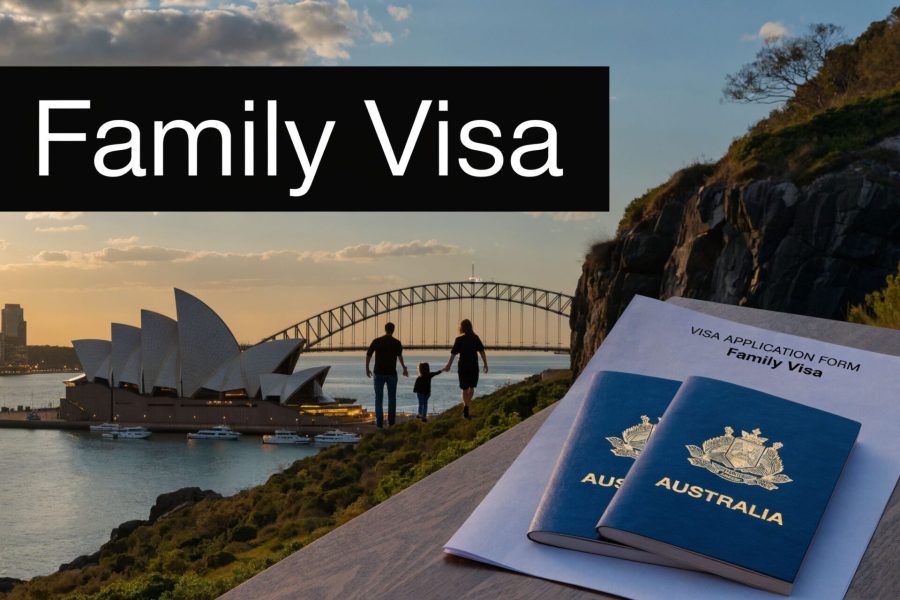
Families start this process long before they open a visa form. One person is in Australia. The other is overseas, or on a temporary visa, or living in a different state with no certainty about what comes next. There’s often a wedding to plan, parents getting older, children caught between school terms, and a constant question in the background: how do we make this official, and how long is it going to take?
A family sponsored visa can be the pathway that brings everyone into the same country and, eventually, into the same daily life. But the paperwork is only one part of it. The harder part is understanding which visa fits, what evidence matters, what the sponsor is promising, and how to cope when processing stretches far longer than you hoped.
This guide is written from a practical migration perspective for people dealing with significant choices, significant costs, and significant waiting. It focuses on the Australian context, especially the streams most families ask about most often.
Important disclaimer: Migration law, policy settings, document requirements, and processing practices change. What you read today may not be accurate by the time you apply or by the time the Department assesses your case. Book an appointment with a registered migration agent for updated advice before acting on this information. For the latest official visa charges and department fees, always check the Department of Home Affairs at https://www.homeaffairs.gov.au/.
Bringing Your Family to Australia An Introduction
Many individuals looking into a family sponsored visa aren’t doing casual research. They’re trying to solve a family problem.
A couple wants to stop living between flights. An adult child wants to bring parents closer. A family needs stability after years of temporary visas and uncertain plans. The emotion behind these applications is genuine, and the law doesn’t ignore that. But the Department still expects structure, proof, and consistency.
The Australian family migration system isn’t one single visa. It’s a group of pathways built around different relationships. Some are designed for spouses and de facto partners. Others deal with parents, children, or more limited family circumstances.
Why the process feels harder than people expect
People assume that if the relationship is genuine, the visa should be straightforward. That isn’t how decision-making works in practice.
A decision-maker doesn’t see your history the way you do. They see uploaded files, dates, forms, police checks, health results, and whether the evidence lines up. That’s why family visa work is less about telling a love story or a family story, and more about proving it in the format the Department can assess.
What usually makes the difference
Strong applications have three things in common:
- The visa choice is correct: The family applies in the stream that matches their situation, not the one that looked quickest on social media.
- The evidence is organised: Documents support the claim clearly, instead of forcing the case officer to guess.
- The family plans for the waiting period: They think about money, living arrangements, travel, work, and emotional pressure before the application goes in.
Practical rule: Don’t treat a family sponsored visa as a form-filling exercise. Treat it as a legal case built around evidence.
If you’re at the beginning, the first task isn’t collecting random documents. It’s understanding the structure of the system so you know which path you’re on.
Understanding the Core of Family Sponsorship
Family sponsorship is the point where people realise this process is much more than submitting forms. A husband wants to bring his wife over. An adult child wants a parent close by. Everyone knows the relationship is genuine, but the Department still asks a harder question. Does this case fit a visa category, and can both sides meet the legal requirements attached to it?
The sponsor is not merely offering an invitation. In Australian migration law, the sponsor takes on a formal role with specific obligations to the Department. The applicant must separately meet the visa criteria. If either side falls short, the application can stall or fail, even where the family relationship itself is genuine.

Sponsorship is legal responsibility, not moral support
Sponsors need to show they are eligible to sponsor, that the relationship is the right one for the visa, and that they understand the commitments attached to sponsorship. In some visa types, that includes financial responsibilities. In others, the core issue is sponsorship history, character concerns, or whether the sponsor is even permitted to sponsor again.
Applicants face their own separate test. Health, character, identity, dependency, custody, and relationship evidence all matter, depending on the visa subclass. A strong sponsor does not cure a weak applicant. A genuine applicant does not cure an ineligible sponsor.
That distinction matters because families spend months gathering documents for the relationship, while missing a sponsorship problem that could have been identified at the start.
The main family visa groups
The family program makes more sense once you separate it into the main visa groups and understand what each group is designed to do.
Partner visas
Partner visas cover spouses and eligible de facto partners. The main issue is whether the relationship is genuine and continuing, supported by evidence across daily life, shared responsibilities, and long-term commitment.
In practice, partner cases carry an emotional burden that families rarely plan for well. Long processing times can affect work plans, travel, housing, and mental health. I tell couples to prepare for the waiting period as seriously as they prepare the application itself.
Parent visas
Parent visas are the clearest example of trade-offs in family migration. Some pathways involve a lower upfront cost and a much longer wait. Others cost far more but may lead to a decision sooner.
Families also need to look beyond the visa label. Age, health, family balance, and the sponsor's circumstances can shape whether a parent pathway is realistic, affordable, or likely to become stressful over time.
Child visas
Child visas can appear straightforward because the relationship is easy to explain. The legal questions are more technical. Age, dependency, custody, adoption history, and whether the child is married or engaged can all affect eligibility.
These cases need careful document planning early. If there are separated parents, court orders, or consent issues, those details should be checked before lodgement, not after a request from the Department.
Other family visas
Other family visas include pathways such as Carer and Remaining Relative. These visas are narrow and heavily defined by legislation. Families assume they are fallback options if partner, parent, or child visas do not fit. Usually they are not.
A family connection helps. The visa criteria still decide the case.
For readers trying to place their situation in the right category before choosing a subclass, a useful starting point is this guide to family migration pathways in Australia.
Choosing Your Pathway A Detailed Visa Comparison
A common family migration scenario starts the same way. One person says, "We just need to pick the visa." A few months later, the family is dealing with a harder question. Can they afford the visa they chose, wait as long as that stream takes, and keep the evidence in good shape for the full life of the application?
Choosing the right pathway is not only about eligibility. It is about choosing the pressure your family can realistically carry. Cost, separation, travel limits, work rights, queue length, and document burden all matter. A visa strategy that looks fine on paper can become difficult if it depends on borrowed funds, uncertain work, or years of family separation.
If you are still sorting out which stream even fits your situation, this overview of family migration pathways in Australia is a useful starting point.
Partner visas onshore and offshore
For partner cases, the first practical split is onshore or offshore. The main subclasses are 820/801 for applicants lodging in Australia and 309/100 for applicants lodging outside Australia. The legal test is familiar across both streams. The Department must be satisfied the relationship is genuine and continuing.
The main difference is how the case works in day-to-day life.
Onshore 820 and 801
The onshore route suits an applicant who is already in Australia and can lodge a valid application here. The benefit is practical rather than legal. It can help with staying together in Australia while the case is processed, and it may affect work rights and access to a Bridging visa depending on the applicant's circumstances.
That does not make it the better option in every case.
An onshore strategy can become risky if the applicant has visa condition issues, uncertain lawful status, or travel needs that the family has not thought through properly. I see people focus on the comfort of being together now and miss the consequences of future travel, expiry dates, or a poor documentary record from the first months of cohabitation.
Strong partner cases show four things clearly:
- Financial interdependence, not just a joint account opened shortly before lodgement
- Shared living arrangements, backed by tenancy records, bills, mail, or other documents that place both people at the same address
- Social recognition of the relationship, with context around family events, travel, and milestones
- Commitment over time, shown through plans, communication, and a consistent timeline
Weak cases have the same problem. The relationship may be genuine, but the file does not prove it in an organised way.
Offshore 309 and 100
The offshore route suits couples who are living apart, couples overseas, or applicants who do not have a workable onshore lodgement option. The evidence standard is not lower. In some cases, it needs more planning because the couple is trying to prove a committed relationship while living in different countries or spending long periods apart.
That creates an emotional strain many families underestimate.
A file can remain pending for a long time. During that period, couples need to keep building evidence instead of assuming the original application is enough. Travel records, updated statements, shared financial commitments, and proof of ongoing contact matter because the relationship does not stop being assessed after lodgement.
Parent visas and the cost decision
Parent visas are the clearest example of trade-offs in family migration. Families are not just choosing a subclass. They are choosing between a lower-cost pathway with a much longer wait and a much more expensive pathway that may move faster.
The Parent visa subclass 103 is the non-contributory option. The Contributory Parent visa subclass 143 involves substantially higher visa costs. The current visa application charges and subclass details are published by the Department of Home Affairs on the official pages for the Parent visa (subclass 103) and Contributory Parent visa (subclass 143).
The practical question is simple. Can the family carry the contributory cost without creating financial stress that lasts for years?
That question needs an honest answer early. I would rather see a family choose a slower path they can realistically fund than commit to a contributory pathway based on hoped-for money from property sales, relatives, or future earnings that may never arrive. A migration plan still has to work when life gets expensive, someone gets sick, or exchange rates move against you.
A practical comparison table
| Visa Stream | Main Question | Cost Position | Practical Impact |
|---|---|---|---|
| Partner visa 820/801 | Can the applicant validly lodge in Australia, and can the couple prove a genuine ongoing relationship? | Check current fee on Home Affairs | May allow the couple to remain together in Australia while the application is processed |
| Partner visa 309/100 | Is offshore lodgement the cleaner legal and practical option? | Check current fee on Home Affairs | Suits couples living apart or applicants who cannot use the onshore pathway |
| Parent visa 103 | Can the family accept a very long wait in exchange for a lower upfront visa cost? | Check current fee on Home Affairs | Lower upfront cost, but long queue can affect care planning and family expectations |
| Contributory Parent visa 143 | Can the family fund a much higher cost for a shorter queue than the non-contributory stream? | Check current fee on Home Affairs | Higher financial pressure, but often a more realistic option for families who need reunion sooner |
A table helps. It does not decide the case for you.
The right pathway is the one that still makes sense after you factor in waiting, evidence maintenance, health checks, police clearances, travel, and family stress.
Other family pathways
Some applicants look at child, carer, remaining relative, or other family visas as fallback options. That approach causes trouble. These streams are tightly defined and turn on specific facts, not general family closeness.
A careful early assessment saves time and money here. If the factual fit is poor, the problem is rarely fixed by writing a longer statement or uploading more documents later.
Meeting the Mark Sponsor and Applicant Eligibility
A common mistake starts like this. A family spends weeks collecting photos, messages, birth certificates, and money transfer records, only to find out later that the sponsor does not meet the legal criteria, or the applicant has a health or character issue that should have been assessed at the start.
That is avoidable.
A family sponsored visa is never just about proving the relationship. The Department assesses the sponsor and the applicant separately, under different rules, and a problem on either side can stop the case. Good preparation means testing eligibility before the family spends heavily on documents, medicals, translations, and plans built around a grant that may not come soon.

What the sponsor must prove
In family cases, the sponsor is part of the legal case, not just the person offering support.
The exact sponsorship rules depend on the visa subclass. In parent cases, for example, the sponsoring child may need to show they are settled in Australia. In some streams, financial commitments also matter, including an Assurance of Support. The practical point is simple. Sponsorship is not an informal promise. It can involve migration status, residence history, identity evidence, and a capacity to accept ongoing obligations under the scheme.
I see families assume that being an Australian citizen or permanent resident settles the issue. It does not always. A sponsor can still run into problems because of past sponsorship history, incorrect assumptions about being "settled", or missing documents that delay assessment.
Sponsor issues to check early
- Migration status: The sponsor must hold the right status for the visa category.
- Residence and settlement history: This is examined closely in parent matters.
- Financial obligations: Some visas require more than general family support and may involve formal financial undertakings.
- Sponsorship history and compliance: Previous sponsorships, debts to the Commonwealth, or other adverse history can affect eligibility.
What the applicant must prove
The applicant has a separate set of legal tests. These include identity, health, character, and evidence of the claimed family relationship or dependency.
Health is the issue families underestimate most, especially in parent cases. The Department applies health criteria across many visa subclasses, and the question is not only whether a person has a diagnosis. The assessment can turn on likely cost to the Australian community and expected use of health or community services. The official policy framework on the Department of Home Affairs website explains how health requirements are assessed, including cases involving significant medical conditions.
That can become the turning point in the case.
By the time a health issue surfaces, families have already spent money and made emotional commitments around care plans, housing, and expected reunion dates. The same pattern appears with character concerns, particularly where an applicant has old convictions, military history, or police certificates from multiple countries that take time to obtain. A practical overview of the health and character requirements for Australian visas can help you identify those risks early.
Eligibility is broader than people expect
A genuine relationship does not fix an ineligible sponsorship. A willing sponsor does not overcome a failed health assessment. Strong emotional reasons for reunion do not remove statutory criteria.
That is why an early eligibility review should cover four separate questions:
- Does the family relationship fit the visa category legally, not just emotionally?
- Can the sponsor lawfully sponsor in this stream, with the right status and history?
- Is there any health, character, or identity issue that needs strategy before lodgement?
- Are there practical barriers such as missing records, long separations, or overseas documents that will slow the case down?
Early warning: Any health history, criminal history, prior visa refusal or cancellation, or long period of separation should be assessed before lodgement. Those issues are easier to plan for early than to explain under Department pressure later.
Families cope better with long processing times when they know, before lodgement, where the significant risks sit. That clarity helps with budgeting, travel decisions, care arrangements, and expectations inside the family. It also reduces one of the hardest parts of the process. Paying for a case that was never legally ready.
Your Application Journey From Preparation to Decision
A family visa application starts with one urgent moment. A wedding is booked. A parent’s health changes. A child is growing up while the family is split across countries. By the time people reach my office, the pressure is not just legal. It is emotional, financial, and time-sensitive.
That pressure is exactly why good applications are built in stages. The strongest files are prepared early, organised clearly, and lodged only when the evidence supports the case. The weak files are honest cases presented badly.

Phase one preparing the evidence
Preparation is where many family cases are won or damaged.
In partner matters, the Department assesses the relationship across four areas: financial, household, social, and commitment. Families have genuine relationships but poor evidence structure. An officer should not have to guess how the relationship developed, where the couple lived, or which documents support which period.
One practical method is a relationship chronology table. A simple spreadsheet works well. Set out the timeline month by month or event by event, then match each period to evidence such as leases, joint bills, bank activity, travel records, photos, messages, and declarations. The goal is clarity. A readable file is easier to assess and easier to defend if questions arise later.
Formal documents matter too. In partner cases, that includes Form 888 declarations from at least two eligible witnesses. It also includes identity records, civil documents, and police checks where required. If any document is missing, inconsistent, or hard to obtain overseas, deal with it before lodgement if possible.
Phase two lodging through ImmiAccount
Lodgement is the technical stage, and technical mistakes create avoidable risk.
The problems I see most are simple ones with serious consequences:
- Dates do not match across forms, statements, travel records, and address history.
- Uploads are badly named, so the officer cannot tell what each document proves.
- Evidence is incomplete at lodgement, with the plan to fix it later.
- Statements are emotional but vague, with very few facts, dates, or examples.
A messy file can lead to delays, requests for more information, or doubts that did not need to arise in the first place. Keep the application easy to assess. If one issue takes ten uploads to understand, the file is harder than it needs to be.
Phase three living with the wait
This stage receives far too little attention in visa guides, yet it shapes the family’s experience more than almost any other part of the process.
Long waits affect money, work plans, care arrangements, and relationships. That is not just my observation from casework. Australian community organisations working with migrant families regularly report stress linked to visa insecurity, separation, and prolonged uncertainty, including in research and submissions published by the Migration Council Australia. The point is familiar to any family living through it. Waiting changes daily life.
Planning helps.
Families cope better when they treat the waiting period as part of the case strategy, not as empty time between lodgement and outcome. That means setting a budget for travel, duplicate housing costs, medical expenses, and document renewals. It also means deciding who will hold updated records, how fresh relationship evidence will be stored, and whether any temporary travel plans are legally realistic.
During the wait, focus on four practical tasks:
- Keep contact and evidence records current if the application depends on an ongoing relationship.
- Respond quickly to Department requests, because missed deadlines create problems that are often preventable.
- Review temporary visa options carefully, especially where there is a risk of misunderstanding the applicant’s intentions or visa history.
- Talk openly inside the family about delay, including money, caregiving, work disruption, and mental strain.
Some families need legal advice at this stage, not because the case is failing, but because the waiting period creates new decisions. Travel, changed circumstances, a pregnancy, a birth, a separation, or a health issue can all affect what should be updated.
Phase four decision grant or refusal
At decision stage, there are three outcomes. The visa is granted, the Department asks for more information, or the application is refused.
A grant is not the end of the paperwork. Families still need to check conditions, travel timing, status issues, and, in staged applications, what is required for the later permanent stage.
A request for more information should be treated seriously and answered carefully. Quick responses are not always good responses. The better approach is a complete, organised reply that directly addresses the point raised.
If the application is refused, read the refusal reasons closely before doing anything else. Some refusals carry review rights. Others require a fresh application or a different legal strategy. Families in that position should understand the difference between a new application and a merits review, including the deadlines and risks involved. This guide to visa appeals and review options explains that process in more detail.
The application journey is not only about forms. It is also about keeping the case legally sound while the family absorbs the cost of waiting, plans around uncertainty, and avoids mistakes that are much easier to prevent than repair.
Costs Timelines and How to Avoid Visa Refusal
Families can survive long processing better than they survive bad assumptions. Cost assumptions are dangerous. Timeline assumptions are worse. Refusal assumptions are the most expensive of all.
A careful application costs time up front, but a weak one can cost far more after lodgement.

What families should budget for
The visa application charge is only one layer.
Most families should think in cost categories, not one single figure:
- Department charges: Always verify current fees directly with https://www.homeaffairs.gov.au/.
- Health examinations: Required medicals can become significant, especially where follow-up reports are needed.
- Police certificates: These can involve multiple countries and varying lead times.
- Translations and declarations: Poorly prepared translated material creates avoidable problems.
- Professional help: Some applicants self-lodge successfully, but complex matters usually benefit from early strategic advice.
The danger isn’t only underestimating the total. It’s underestimating when the money will be needed.
Why timelines vary so much
People want one clean answer on processing. The system rarely gives one.
Timelines depend on the visa stream, annual planning settings, document quality, health and character checks, sponsorship issues, and whether the Department needs further information. A complete file gives the case fewer reasons to stall. It doesn’t guarantee speed, but it removes avoidable friction.
The refusal patterns that keep repeating
Refusals are rarely random. They follow familiar patterns.
Partner visa refusals
The most common problem is poor proof of a genuine relationship. This doesn’t always mean the relationship is weak. It often means the evidence is fragmented, inconsistent, or too thin across the required areas.
Parent visa refusals
These come back to eligibility mechanics. The Balance of Family Test matters. Sponsor requirements matter. Health concerns matter. Families sometimes spend months discussing the queue and the cost, then discover the legal threshold was the primary issue.
Health and character problems
These are the cases where delay can become dangerous. If there’s a likely issue, the strategy should be built around it from the start rather than hoping it won’t be raised.
A refusal starts much earlier than the refusal letter. It starts when a family ignores a weak point because dealing with it feels uncomfortable.
If a refusal has already happened, or if review rights may apply, understanding the process for visa appeals and reviews can help you assess the next step properly.
Family Sponsored Visa FAQs
Can I work while my partner visa is being processed
Work rights depend on the visa status you hold while the application is pending, including any bridging visa arrangements. The answer is not the same for every person. It depends on how and where the application was lodged, what visa you held at the time, and the conditions attached to your current status.
Such questions, when answered quickly online, can be misleading. Check the grant notice for your current visa or bridging visa and get specific advice if you’re unsure.
What if the relationship breaks down after lodgement
That depends on timing, the visa stage, and the reason for the breakdown. Some situations may involve serious legal consequences for the application. Others may require immediate advice about whether there are any protections or alternative pathways available.
If family violence is a factor, the matter becomes especially sensitive and should be assessed urgently with proper professional support.
Is the Contributory Parent visa always the better option
Not always. It’s the faster parent pathway compared with the non-contributory route, but “better” depends on what the family can realistically sustain.
If paying the large charges would create long-term hardship, the faster pathway may not be the better pathway for that family. A slower option can still be the more workable one if it aligns with the family’s finances and expectations.
Can parents stay in Australia on another visa while waiting
Sometimes families explore temporary options so parents can spend time in Australia while a longer-term pathway is underway. That needs careful planning.
Temporary visas shouldn’t be used on the assumption that they are guaranteed, automatic, or risk-free. The legal purpose of the temporary visa still matters, and each application must stand on its own facts.
What documents matter most for a partner case
The most persuasive files show a relationship over time, not a burst of documents just before lodgement. Joint financial material, shared address evidence, travel records, communication history, Form 888 declarations, and a clear chronology usually carry more weight than a large pile of repetitive screenshots.
Quality beats volume when the evidence is properly organised.
How can a migration agent help
A good migration agent helps before mistakes become expensive. That means identifying the right visa pathway, testing sponsor and applicant eligibility, spotting weak points in evidence, preparing a coherent submission, and managing responses if the Department raises concerns.
The value isn’t only in filling forms. It’s in reducing avoidable risk, giving realistic advice, and helping the family make decisions with clear eyes rather than pressure and guesswork.
If you want specific guidance on a family sponsored visa, My Visa Guide can help assess your options, identify risks early, and prepare a stronger application strategy. Because migration rules and fees can change, book an appointment with a registered migration agent for updated advice specific to your situation, and always confirm current department charges on the Department of Home Affairs website.