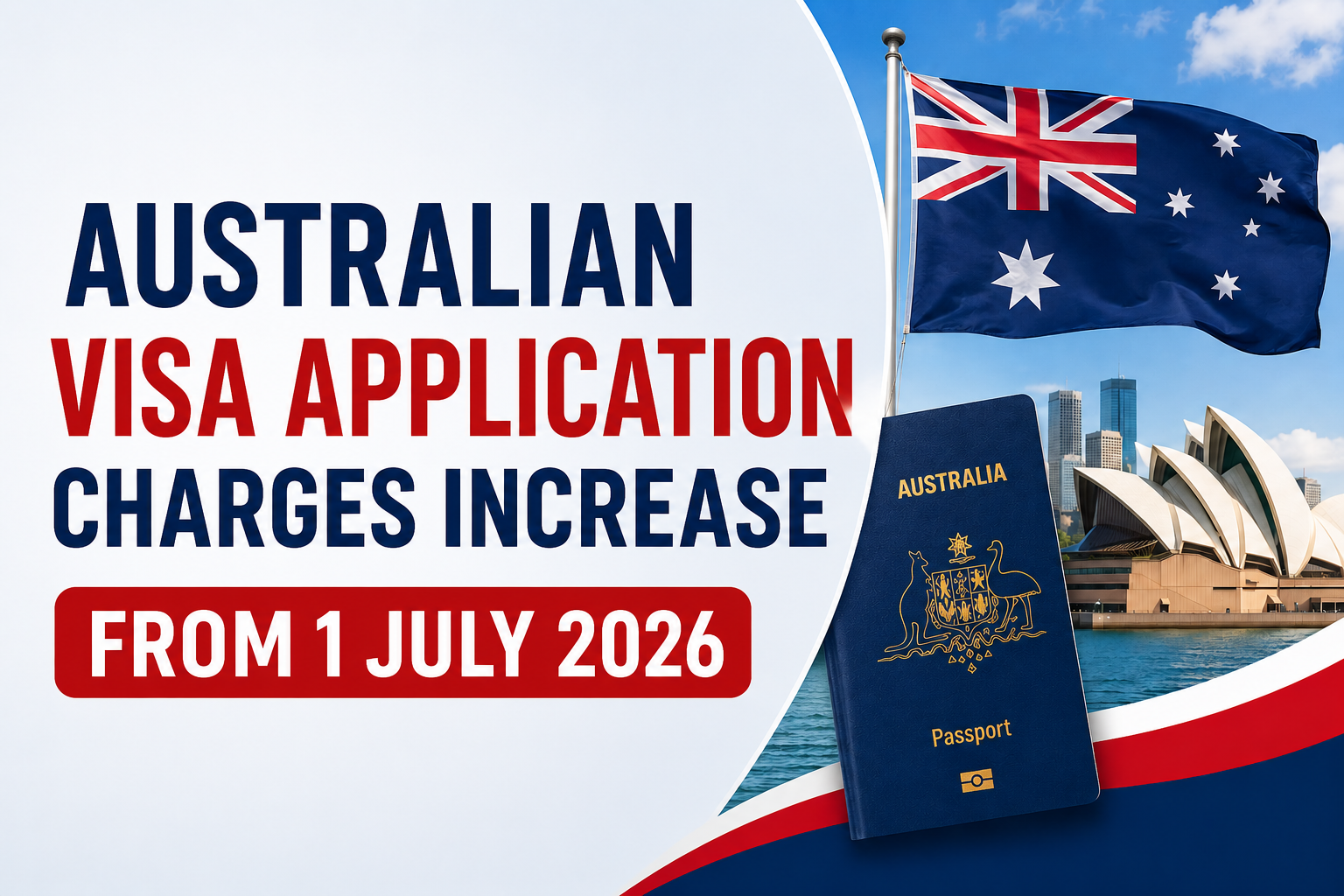
IMPORTANT NOTICE
So, you’re set on studying in Australia? It’s a brilliant move, but before you start daydreaming about Bondi Beach, let's get the official stuff sorted. The whole process really boils down to two major hurdles: first, getting an offer from an Australian school, and second, convincing the Australian Government to grant you a student visa.
Each of these steps has its own checklist. You'll need to prove you're a genuine student, show you have the funds to support yourself, and get the right health cover.
Disclaimer: Immigration policies and requirements change frequently. The information in this article is for general guidance only and may not be current when you read it. For the latest, personalised advice, we strongly recommend booking an appointment with a registered migration agent. All official visa fees are listed on the Department of Home Affairs website at https://www.homeaffairs.gov.au/.
Your Roadmap to Studying in Australia
Navigating the path to study in Australia can feel a bit overwhelming, but it doesn't have to be. Think of it as a two-stage mission: first, you conquer the university application, and then you tackle the visa application. Get the first one wrong, and you can't even start the second.
We've laid out the entire process here, from start to finish, so you know exactly what to expect. No jargon, no confusion—just a clear, step-by-step guide.
The Two Core Phases of Your Journey
Getting from where you are now to a classroom in Australia happens in two distinct phases. This chart gives you a bird's-eye view of the entire journey.

As you can see, you have to successfully clear one stage before moving on to the next. It’s a sequential process, so tackling it in the right order is non-negotiable.
To make things even clearer, let's break down what you'll need to do in each of those two big phases.
| Phase | Key Requirement | What It Means For You |
|---|---|---|
| Phase 1: School Admission | Academic Acceptance | You need to meet the course entry requirements (grades, prerequisites) set by your chosen university or college. |
| Phase 1: School Admission | Confirmation of Enrolment (CoE) | Once you're accepted and pay your deposit, the school issues a CoE. This is your golden ticket to apply for the visa. |
| Phase 2: Visa Application | Genuine Student (GS) Requirement | You must convince immigration officials that your main reason for coming to Australia is genuinely to study. |
| Phase 2: Visa Application | Financial Capacity | You have to prove you have enough money to cover tuition, travel, and living costs for your first year. |
| Phase 2: Visa Application | Health & Character Checks | This involves getting mandatory health insurance (OSHC) and passing character assessments. |
Think of these as the absolute pillars of your application. Getting any one of them wrong can bring the whole thing to a halt.
The Pillars of a Successful Application
Let's dig a little deeper into those core requirements. These are the non-negotiables that Australian authorities will be looking at very closely.
- Academic Acceptance: Before anything else, you must prove you're qualified for your course. This means meeting the academic grades and English language scores the institution demands.
- Confirmation of Enrolment (CoE): After you get your offer letter and pay the initial tuition deposit, the school will send you a CoE. This official document is absolutely essential for your visa application. You can't apply without it.
- Genuine Student (GS) Requirement: This is a big one. You have to clearly demonstrate that your primary motivation is to study in Australia and that your chosen course makes sense for your future career path.
- Financial Capacity: You must provide evidence that you can cover your travel costs, your first 12 months of tuition fees, and your living expenses. The government currently sets the annual living cost figure at AUD$29,710.
- Health and Character: This is standard procedure. You'll need to pass a medical examination and meet Australia's character requirements. A key part of this is purchasing Overseas Student Health Cover (OSHC) for the entire duration of your stay.
Getting all this organised takes time and careful planning. Juggling applications with everything else can be tough, so learning good time management now will pay off later. These 10 actionable time management tips are a great place to start. In the next sections, we'll dive into each of these requirements in much more detail.
Securing Your Spot at an Australian Institution
Before you can even think about applying for a student visa, there's a critical first step you absolutely must nail: getting accepted into an Australian educational institution.
Think of it as the foundation for everything that follows. Without a confirmed place in a course, your dream of studying in Australia simply can't get off the ground. This stage is all about proving to your chosen university, TAFE, or college that you have what it takes to succeed, which in turn sets the stage for a strong visa application.
The CRICOS Rule You Cannot Ignore
When you start looking for courses, your first and most important filter should be CRICOS. This stands for the Commonwealth Register of Institutions and Courses for International Students, and it's non-negotiable.
Here’s the deal: only institutions and courses listed on the CRICOS register are legally allowed to enrol international students. If you pick a course that isn't on this list, you're automatically ineligible for the Student Visa (Subclass 500). Simple as that.
Golden Rule for Course Selection: If a course isn’t on the CRICOS register, for the purposes of a student visa, it might as well not exist. Always double-check your course and institution on the official CRICOS website before you even think about applying.
Meeting Academic and English Prerequisites
Every single course in Australia has its own unique entry requirements. These are in place to make sure you have the right background to handle the coursework and thrive in your studies.
These prerequisites generally fall into two buckets:
- Academic Requirements: This is all about your previous schooling. For a bachelor's degree, you'll need to show you’ve completed the equivalent of Australian Year 12. For a master's program, you’ll usually need a relevant bachelor's degree.
- English Language Proficiency: If English isn’t your first language, you have to prove you can keep up. This means taking a recognised test like IELTS, PTE Academic, or TOEFL. The minimum scores can vary a lot between institutions and courses, so you need to check the specifics.
It’s vital you check the exact entry criteria on the institution's website for the course you're interested in. A Bachelor of Engineering will have totally different prerequisites than a Diploma of Hospitality Management. Getting expert advice on matching your qualifications with the right institution can be a massive help; you can learn more about how we assist with course and university selection in our detailed guide.
From Offer Letter to Your Golden Ticket: The CoE
Once you’ve sent off your application with all your documents—like academic transcripts and English test results—the institution will review it. If you're successful, they'll send you a Letter of Offer.
This letter breaks down the course details, tuition fees, and any other conditions you need to meet. To lock in your spot, you'll usually need to pay a deposit towards your tuition fees and organise your Overseas Student Health Cover (OSHC).
After you've accepted the offer and made the payment, the institution will issue the single most important document for this stage: the Confirmation of Enrolment (CoE).
The CoE is your golden ticket. It's the official, government-registered proof that you have a spot waiting for you in a course. You absolutely cannot lodge your Student Visa (Subclass 500) application without a valid CoE. It's the final piece of the puzzle that connects your academic acceptance to the start of your visa journey.
Disclaimer: Immigration policies and requirements change frequently. The information in this article is for general guidance only and may not be current when you read it. For the latest, personalised advice, we strongly recommend booking an appointment with a registered migration agent. All official visa fees are listed on the Department of Home Affairs website at https://www.homeaffairs.gov.au/.
Navigating the Student Visa (Subclass 500) Requirements
Alright, you’ve got your Confirmation of Enrolment (CoE) in hand. Now comes the main event: applying for your Student Visa (Subclass 500).
Think of this visa as the key that unlocks your entire Australian study adventure. Getting this part right is absolutely critical. The application is a bit like building a case for yourself, where every document and every answer you provide adds strength and proves you're a serious, genuine student.

The Genuine Student (GS) Requirement
The absolute heart of your visa application is proving you are a Genuine Student (GS). This new requirement replaced the old GTE statement and shifts the focus to a series of targeted questions inside your visa application form.
What immigration officers are really looking for is a clear, believable story. They need to understand why you're coming to Australia, and be totally convinced that your main goal is to get a quality education.
To nail the GS requirement, you'll need to clearly explain:
- Why this course? What made you choose this specific program? You need to connect it to what you’ve studied before and where you want to go in your career.
- Why Australia? Of all the places in the world, why here? What is it about Australia, and your chosen university or college, that made it the right fit for this course?
- Your future plans: How is this qualification going to help you when you return home? Show them that this course is a logical step in a well-thought-out career plan.
- Your ties back home: You need to show that you have strong connections to your home country—things like family, community involvement, or great job prospects—that give you a very good reason to go back after you graduate.
This is not a box-ticking exercise. Your answers have to be personal, detailed, and completely authentic. A copy-paste, generic answer is a massive red flag for case officers. To really get this right, check out our guide on the Genuine Student Requirement for a much deeper dive.
Proving Your English Language Proficiency
Next up, you have to show that your English is up to scratch. Unless you're from an exempt country, you’ll need to provide results from an approved English language test, and it must have been taken within the last two years.
Australia recognises a few different tests, and the Department of Home Affairs sets the minimum scores you need to hit for the visa.
Commonly Accepted Tests and Minimum Scores:
| Test Provider | Minimum Score (with no other course) | Minimum Score (with 10 weeks ELICOS*) | Minimum Score (with 20 weeks ELICOS*) |
|---|---|---|---|
| IELTS | 6.0 overall | 5.5 overall | 5.0 overall |
| PTE Academic | 50 overall | 42 overall | 36 overall |
| TOEFL iBT | 64 overall | 46 overall | 35 overall |
| CAE | 169 overall | 162 overall | 154 overall |
*ELICOS stands for English Language Intensive Courses for Overseas Students.
A word of warning: always double-check the English requirements for your actual course. Your university might demand a higher score than the minimum needed for the visa.
Arranging Your Overseas Student Health Cover (OSHC)
Finally, one non-negotiable condition of your student visa is having health insurance for your entire stay. This is called Overseas Student Health Cover (OSHC).
OSHC is there to help cover your medical bills if you get sick—things like visiting a doctor, some hospital treatments, ambulance cover, and certain medications. You have to get this sorted before you lodge your visa because the policy details must be included in your application.
You can buy OSHC from any approved Australian health insurer. Many universities have a preferred provider and can even help you arrange it when you accept your offer. It's your job to make sure your cover starts the day you land in Australia and doesn't run out before your visa expires.
Disclaimer: Immigration policies and requirements change frequently. The information in this article is for general guidance only and may not be current when you read it. For the latest, personalised advice, we strongly recommend booking an appointment with a registered migration agent. All official visa fees are listed on the Department of Home Affairs website at https://www.homeaffairs.gov.au/.
Let's talk money. Proving you have enough funds to support yourself is easily one of the biggest steps on any "study in Australia requirements" checklist.
It’s not just about having the money; it’s about proving it in the very specific way the Department of Home Affairs wants to see it. Think of it like you're building a financial case for yourself—every document has to be clean, legitimate, and tell a clear story of stability.
The whole point of this is to make sure you can actually focus on your studies without worrying about rent or food, which could lead you down a path of breaching your visa conditions. In a way, it’s a safety net for you just as much as it is a check for the government.

Calculating the Magic Number
So, how much do you actually need to show? Thankfully, it’s not a mystery. There’s a straightforward formula you need to follow. You must prove you have enough funds to cover three key things for your first 12 months down under.
The formula looks like this:
1 Year of Tuition Fees + 1 Year of Living Costs + Travel Expenses = Total Funds Required
Let's break that down:
- Tuition Fees: This is the amount listed on your Confirmation of Enrolment (CoE) for the first year of your course.
- Living Costs: The Department of Home Affairs sets a benchmark figure for this. As of October 2024, this amount is AUD$29,710 for a single applicant for one year.
- Travel Expenses: This is generally pegged at around AUD$2,000 to cover a return flight, although it can vary depending on where you're coming from.
A Quick Heads-Up: That living cost figure is what the government uses for the visa application. Your actual day-to-day spending in Australia might be higher or lower based on your lifestyle and which city you live in. These figures can change, so always double-check the official Department of Home Affairs website for the latest numbers.
What Counts as Proper Evidence?
You can't just rock up with a suitcase of cash. The evidence needs to be official and something the Department can easily verify. The most common ways to show your funds are:
- Bank Statements: Money held in an account under your name, your partner's name, or your parents' names. Ideally, the funds should have been sitting there for at least three months to demonstrate genuine savings.
- Loan Documents: An official approval letter from a bank or financial institution for an education loan.
- Scholarship Letters: If you've landed a scholarship from your university or government, the official letter can be used to reduce the total amount you need to show from other sources.
Australia’s student visa framework is pretty thorough. Beyond finances, you'll need that CoE from a CRICOS-registered school and you have to satisfy the new Genuine Student (GS) requirement. The financial evidence needs to cover those big-ticket items: tuition (often AUD$20,000-50,000 a year), living costs (AUD$29,710 from late 2024), and travel. For a deeper dive into how these rules are being applied, it’s worth reading some expert insights on student visa planning levels to understand the bigger picture.
Common Mistakes We See All the Time
So many strong applications get tripped up by simple financial errors. Watch out for these common pitfalls:
- Last-Minute Deposits: Huge, unexplained sums of money appearing in your account right before you apply are a massive red flag. Case officers are trained to look for a consistent history of savings.
- Dodgy Fund Sources: Money from unsecured personal loans from unofficial lenders, or from a property sale that hasn't been finalised yet, usually won't be accepted.
- Incorrect Documents: Submitting bank statements that aren't in English or don't clearly state the account holder's name will, at best, cause delays and, at worst, lead to a refusal.
Disclaimer: Immigration policies and requirements change frequently. The information in this article is for general guidance only and may not be current when you read it. For the latest, personalised advice, we strongly recommend booking an appointment with a registered migration agent. All official visa fees are listed on the Department of Home Affairs website at https://www.homeaffairs.gov.au/.
Meeting Australia's Health and Character Standards
So, you’ve sorted your course and your finances. But what about you as a person? Australia’s student visa process also looks at your health and character. This isn't about being difficult; it's simply a standard integrity check to keep everyone safe and maintain the welcoming community Australia is famous for.
These requirements are designed to make sure you won’t pose a risk to public health or put a heavy strain on the healthcare system. It’s a normal part of the process for most visa applicants, and something every international student needs to clear.
The Mandatory Health Examination
You’ll almost certainly need to undergo a medical examination as part of your application. Don't stress about this. It’s a routine check-up that usually involves a physical exam, a chest x-ray, and sometimes a few blood tests to screen for conditions like tuberculosis.
But you can’t just pop down to your local GP. The exam has to be done by a specific panel physician who is approved by the Australian Government. You'll need to book this appointment yourself, and it’s a good idea to get it done as soon as you're asked to, because the results can take a little while to process.
The health check is a non-negotiable step that directly affects your visa timeline. If you put off your appointment, you’ll be putting off your visa decision. It's best to act fast as soon as the Department of Home Affairs sends the request.
Passing the Character Test
The other piece of the puzzle is the character requirement. This is Australia's way of making sure that people coming into the country are of good character and don't present any security risks. For the vast majority of students, this is a very straightforward declaration.
You’ll be asked to answer questions about your background and honestly declare any criminal convictions you might have, from any country. In some cases, depending on where you've lived, you may also need to provide police clearance certificates.
Here's what you need to focus on for the character test:
- Full Disclosure: Be completely honest. Trying to hide a minor issue is often treated more seriously than the issue itself.
- Police Certificates: If requested, you must get official police certificates from any country where you’ve lived for 12 months or more in the last 10 years, since you turned 16.
- Good Character: The assessment looks at your criminal record, any associations with groups of concern, and your general conduct, both past and present.
Again, these are standard checks and nothing to be alarmed about. For details on another must-have, your health insurance, take a look at our guide on Overseas Student Health Cover (OSHC).
Disclaimer: Immigration policies and requirements change frequently. The information in this article is for general guidance only and may not be current when you read it. For the latest, personalised advice, we strongly recommend booking an appointment with a registered migration agent. All official visa fees are listed on the Department of Home Affairs website at https://www.homeaffairs.gov.au/.
From Hitting Submit to Planning Your Future
You've done the hard yards and gathered all your documents. Now, it's time for the final administrative hurdle: lodging your Student Visa (Subclass 500) application. This is the moment all that preparation comes together.
Everything happens online through the Department of Home Affairs’ ImmiAccount. This portal is your command centre for uploading documents, paying the visa application fee, and keeping an eye on your application's progress. Think of it as your personal digital file for your entire visa journey.
Lodging Your Application the Right Way
Submitting your application is about more than just filling in boxes on a form. You’re presenting a clear, logical case for why you should be granted a student visa. When you upload your evidence, make sure every document is a high-quality scan and is clearly labelled (e.g., "Passport_Bio_Page.pdf", "Confirmation_of_Enrolment.pdf"). It's a small detail, but it makes a huge difference to the case officer reviewing your file.
Crucial Tip: Check, and then double-check, every single document before you hit 'submit'. A missing page from your bank statements or an English test score that’s just expired can cause major delays or even lead to a flat-out refusal. Meticulous organisation at this stage is absolutely your best friend.
Thinking Beyond Graduation: The Subclass 485 Visa
Your Australian adventure doesn't have to stop the moment you toss your graduation cap in the air. For many international students, graduation is just the beginning of a new chapter, and that's exactly what the Temporary Graduate visa (Subclass 485) is for.
This visa is an incredibly powerful tool that allows eligible graduates to stay, live, and gain valuable Australian work experience for a period that typically ranges from two to four years—sometimes even longer, depending on your qualification and where you studied.
Understanding Your Post-Study Options
The Subclass 485 visa has a few different streams, but the one most international students use is the Post-Study Work stream. It's a fantastic opportunity to take the skills you’ve just spent years learning and apply them in a real-world, professional setting. That kind of experience can be invaluable for your career, whether you plan on heading home eventually or hope to pursue longer-term residency in Australia.
This visa essentially bridges the gap between being a student and potentially migrating permanently. Getting your Subclass 500 visa right is the first, non-negotiable step. To get a better sense of how competitive things are, you can explore more about Australia's recent visa statistics. The experts at My Visa Guide live and breathe this stuff, focusing on pathways like the post-study work visa (Subclass 485) that can eventually lead to permanent residency through points-tested skilled visas.
Disclaimer: Immigration policies and requirements change frequently. The information in this article is for general guidance only and may not be current when you read it. For the latest, personalised advice, we strongly recommend booking an appointment with a registered migration agent. All official visa fees are listed on the Department of Home Affairs website at https://www.homeaffairs.gov.au/.
Frequently Asked Questions About Australian Study Requirements
It's completely normal to have a long list of questions when you're piecing together all the requirements to study in Australia. Let's tackle some of the most common ones we hear from students to help clear things up.
Think of this as your go-to guide for those specific "what if" scenarios that always seem to pop up. Getting these details straight can make the whole process feel much less daunting.
Can I Work While Studying in Australia?
Yes, you certainly can. The Student visa (Subclass 500) is designed to allow you to gain some work experience and help cover your living costs. At the moment, you can work up to 48 hours per fortnight while your course is running.
When you’re on a scheduled break, like your summer holidays, you can work unlimited hours. But here’s a crucial tip: always, always double-check the specific work conditions on your visa grant letter. These rules can and do change.
What Is the Genuine Student (GS) Requirement?
The Genuine Student (GS) requirement is the new way the government assesses your true intentions for coming to Australia. It has replaced the old GTE statement and now involves a series of targeted questions right in your online visa application form.
You'll need to write clear, personal answers explaining why you've chosen your specific course and institution, why Australia is the right fit over other countries, and how this degree will concretely benefit your career when you return home. It's all about painting a clear and convincing picture of your academic and professional goals.
Do I Need to Pay for My Entire Course Before Applying?
No, you don't have to pay for the whole course in one go. To secure your Confirmation of Enrolment (CoE) from your university, you’ll usually just need to pay an initial deposit, which is typically the fee for your first semester.
For the visa application itself, you need to prove you have genuine access to the money for your first 12 months of tuition fees and your first 12 months of living expenses (currently set at AUD$29,710), plus your travel costs to and from Australia.
Disclaimer: Immigration policies and requirements change frequently. The information in this article is for general guidance only and may not be current when you read it. For the latest, personalised advice, we strongly recommend booking an appointment with a registered migration agent. All official visa fees are listed on the Department of Home Affairs website at https://www.homeaffairs.gov.au/.
What Happens if My Student Visa Is Refused?
If your visa application is refused, you'll receive a notification from the Department explaining the exact reasons for their decision. Depending on where you applied from (in or outside Australia), you might have the right to appeal the decision at the Administrative Appeals Tribunal (AAT).
This is a formal and often tricky process. If you end up in this situation, getting professional advice from a registered migration agent is essential to understand your options and map out the best way forward. For students looking into specific fields like healthcare, this international student guide also offers a good overview of general entry hurdles.
Ready to take the next step on your journey to study in Australia? The requirements can feel overwhelming, but you don’t have to figure it all out on your own. The team at My Visa Guide offers expert, end-to-end support to make sure your application is strong, complete, and lodged correctly. From choosing a course to submitting your visa and planning your post-study options, we’re here to guide you. Book your consultation with a registered migration agent today!