IMPORTANT NOTICE
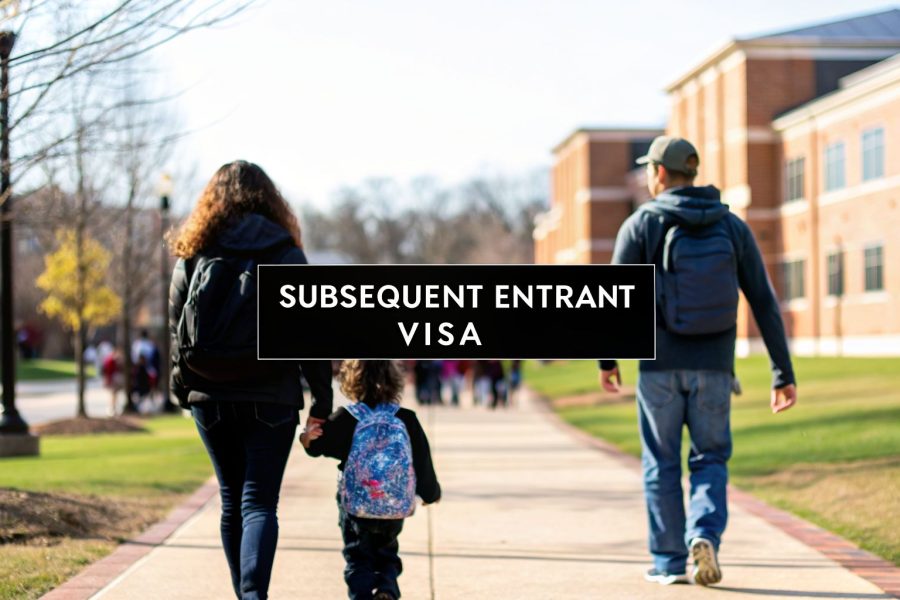
Starting your studies in Australia is an incredible journey, but it’s one that can feel incomplete when your family is thousands of kilometres away. Thankfully, there’s a specific visa designed to close that distance: the Subclass 500 Subsequent Entrant visa.
This visa stream is built for a very common scenario. It’s for family members who need to join you in Australia after you’ve already been granted your own student visa and have often already started your course. It turns your solo study adventure into a shared family experience.
Uniting Families On Your Study Journey In Australia

Let’s paint a picture. You’ve been in Australia for a semester, you’re settling into your course, and life is good. But you realise how much you miss sharing the small, everyday moments with your partner or seeing your child grow up. This is exactly where the subsequent entrant visa comes in.
It’s more than just a visa; it’s the mechanism that keeps your family unit intact during a massive chapter of your life. It allows your eligible family members—like your spouse, de facto partner, or dependent children—to apply to come and live with you for the rest of your study period.
Why This Visa Matters
At its core, the subsequent entrant stream is about supporting the primary student. Having your family close provides a crucial emotional anchor and a solid support system, which can make all the difference to your academic success. The visa is a recognition that your life isn’t just about lectures and libraries.
The Subclass 500 Subsequent Entrant visa is designed so international students don’t have to choose between their education and their family. It allows dependants to live, and in some cases work or study, alongside the primary student, helping create a stable and supportive home environment.
This guide will break down everything you need to know. We’ll walk through who is eligible, the step-by-step application process, and the rules your family will need to follow once they arrive.
First, here’s a quick snapshot of the visa’s main features to give you a clear overview.
Subsequent Entrant Visa Quick Overview
| Aspect | Key Detail |
|---|---|
| Visa Type | Temporary visa for family members of a Subclass 500 holder. |
| Who Can Apply | Spouses, de facto partners, and dependent children under 18. |
| When to Apply | After the primary student visa has been granted. |
| Work Rights | Dependent partners may have work rights (often limited). |
| Study Rights | Dependants can study for up to three months. |
| Key Requirement | Must prove a genuine relationship and financial capacity. |
Now that you have the basics, we can dive into the finer details of the eligibility criteria and application process.
Disclaimer: Immigration law and policies are subject to frequent changes. For the most current and personalised advice, we strongly recommend booking an appointment with a registered migration agent, as the information in this article may no longer be true at the time of reading. Always refer to the official Department of Home Affairs website for the latest information on visa fees and government charges.
Understanding the Subsequent Entrant Visa
So, what exactly is a 500 subsequent entrant visa? Let's use an analogy. Think of the main student visa holder as the first person to book a long trip to Australia for their studies. Their family members are the travel companions who decide to join the adventure a little later, instead of all leaving on day one.
This visa is designed for that exact scenario. It's a specific pathway for the family members of a student visa holder to come to Australia after the student has already had their own visa granted and has started their journey.
Subsequent Entrant Versus an Initial Dependant
When a student first applies for their Subclass 500 visa, they have the option to include their eligible family members in that same application. If the visa is granted, everyone gets their visa at the same time and can travel together. This is the most straightforward route for families who know from the beginning that they'll be moving as a unit.
The 500 subsequent entrant visa, on the other hand, is for a different set of circumstances. It’s for family members who, for whatever reason, were not included in that original application and now want to join the student in Australia partway through their course.
The real purpose of the subsequent entrant stream is to maintain family unity. It allows a student’s partner and children to live, and often work or study, alongside them in Australia, providing crucial support during what can be a long period away from home.
This offers a great deal of flexibility. For instance, a partner might need to wrap up a work contract back home, or perhaps a child needs to finish their current school year before making the move. The subsequent entrant visa makes these kinds of staggered arrivals possible.
What Does "Subsequent Entrant" Actually Mean?
The world of Australian immigration is filled with official terminology, but the idea here is quite simple. A ‘subsequent entrant’ is just a family member who applies to enter Australia at a later date—that is, subsequent to the main visa holder. They are still dependants, but their application is lodged separately and at a different time.
Their visa is directly tied to the main student's visa, which has a few important implications:
- Relationship Requirement: The relationship (like a marriage or de facto partnership) generally must have existed before the student's visa was granted.
- Visa Validity: A subsequent entrant's visa will almost always expire on the same day as the primary student's visa.
- Linked Status: If the main student's visa is cancelled for any reason, the subsequent entrant's visa will also be cancelled.
You are, in essence, applying to add a passenger to a journey that's already underway. Your application needs to prove your connection to the lead traveller and show that you meet all the requirements to join them for the rest of their stay. Getting this core concept right is the first step toward putting together a successful application.
Disclaimer: Immigration policies change frequently. For the most current advice and personalised guidance, please book an appointment with a registered migration agent, as the information in this article may no longer be true at the time of reading. Always refer to the official Department of Home Affairs website for the latest information on visa fees and government charges.
Nailing the Eligibility Criteria for Your Family
Getting a Subclass 500 subsequent entrant visa for your family comes down to ticking a few crucial boxes. Think of it less like a checklist and more like telling a complete story to the Department of Home Affairs—a story that proves your relationship is real, you can support yourselves, you're in good health, and you genuinely plan to be here only for the duration of the study.
Each part of this story is just as important as the next. If one area is weak, it can put the whole application at risk. Let’s break down exactly what you need to show them.
Proving You’re a Family Unit
First things first, the person applying must be a genuine ‘member of the family unit’ of the main student visa holder. Australian immigration law is very particular about what this means.
Generally, this includes:
- Your spouse: Someone you are legally married to.
- Your de facto partner: A partner you've been in an exclusive, committed relationship with for at least 12 months before lodging the visa.
- A dependent child: Your (or your partner's) child who is under 18 years old and unmarried.
You can’t just say you’re a partner or a spouse; you have to prove it with solid evidence. For married couples, a marriage certificate is the starting point. For de facto partners, the bar is much higher—you'll need to show evidence of your shared life, covering everything from finances and social life to how you run your household.
One of the biggest mistakes we see is when the relationship wasn't declared on the original student visa application. For a subsequent entrant visa, the marriage or de facto relationship must have generally been in place before the student got their visa. You have to have declared them on that initial form, even if they weren't planning to come to Australia at that time.
Showing You Have the Financial Capacity
Next up is the money. The Australian government needs to be confident that your family won't struggle financially or need to rely on public support while you're here. This is a very common stumbling block for applicants.
You’ll need to prove you have access to funds to cover:
- Living Costs: A set amount determined by the government for the student, their partner, and every child.
- Tuition Fees: Any outstanding course fees for the primary student.
- School Fees: If you have school-aged children, you must budget for their annual school fees.
- Travel Costs: Enough money for return flights home for everyone in the family unit.
These figures are updated from time to time, so always check the latest requirements. You'll need to back this up with clear proof, like bank statements or a loan agreement, showing you've had the required amount for a specific period. For the most current visa application charges, always go straight to the source on the official Department of Home Affairs website.
Meeting the Health and Character Standards
Anyone applying for a visa to Australia, including family members, has to meet strict health and character requirements. This is all about protecting the Australian community.
The Health Requirement: Every family member on the application will need a medical check-up with a government-approved doctor. The exam screens for any health issues that could be a risk to public health or put a major strain on Australia’s healthcare system. On top of that, everyone must have adequate Overseas Student Health Cover (OSHC) for the entire time they plan to be in Australia.
The Character Requirement: Anyone aged 16 or over must provide police clearance certificates from every country they’ve lived in for 12 months or more in the last 10 years. You absolutely must declare any and all criminal convictions, no matter how minor or how long ago they were.
Satisfying the Genuine Student Requirement
Finally, your family member also has to meet the Genuine Temporary Entrant (GTE) requirement, which has now been updated to the Genuine Student (GS) requirement. This is the same test the main student visa holder had to pass. You have to convince the Department that your family member’s main reason for coming to Australia is to join you temporarily while you complete your studies.
This usually involves a written statement and supporting documents that show you have strong reasons to return to your home country once the course is finished. This could be things like property, a job waiting for you, or close family ties. You can get a much deeper understanding of this crucial test in our detailed article on what is the Genuine Student requirement.
Keeping up with these requirements is vital, especially as policies change. Australia remains a top destination for students; in late 2025, there were around 709,437 international students here, a slight rise even as the rules were getting tighter. These reforms, which include a potential application fee increase from AUD 1,600 to AUD 2,000 in 2026, haven’t dampened the desire to study Down Under. You can find more analysis on this trend over at CAQA Resources.
Disclaimer: Immigration information can change without notice. The details in this article may not be current when you read them. To get the most accurate and up-to-date advice for your specific situation, please book an appointment with a registered migration agent. Always refer to https://www.homeaffairs.gov.au/ for any department fees for any visa.
Your Step-by-Step Application Guide
Bringing your family to Australia while you study is a massive step, and the Subclass 500 subsequent entrant visa is the key. But turning that idea into a reality means navigating the application process with care.
Think of it less like filling out a form and more like telling a story—the story of your family, backed by solid proof. A well-prepared application is your best shot at avoiding the simple mistakes that can lead to frustrating delays. We’ll walk you through the entire journey, from gathering your documents to hitting ‘submit’, and explain the crucial differences between applying from inside or outside Australia.
Stage 1: Gather Your Core Documents
Before you even log in to the ImmiAccount portal, your first job is to become a document detective. This is the foundation of your family member’s application, and rushing this stage is a classic mistake we see all too often.
Get started by organising everything into clear, logical folders:
- Identity Documents: This means a valid passport for every family member coming over. Make sure each one has at least six months of validity left. You'll also need birth certificates for any children.
- Relationship Evidence: This is where you prove your connection, and it’s non-negotiable. For a spouse, the marriage certificate is your starting point. For a de facto partner, you need to show you’ve been together for at least 12 months with evidence like joint bank accounts, a lease with both names, and photos of your life together.
- The Student’s Status: You’ll need a copy of the main student visa holder's current visa grant letter. Just as important is their Confirmation of Enrolment (CoE) from their university or college.
- Financial Documents: Here, you prove you can support everyone. This could be bank statements, a letter confirming a loan, or a declaration from a sponsor. You need to show you have enough for living costs, travel, and any school fees for children.
- Health Insurance: You must have an active Overseas Student Health Cover (OSHC) policy. Crucially, it has to cover every single family member included in the application.
A quick but vital tip: if any of your documents aren't in English, they must be translated by a NAATI-accredited translator. Double-check that every name and date is consistent across all your paperwork—a small typo can cause big headaches.
Onshore vs. Offshore Applications
Where your family member applies from has a huge impact on the process. They can either apply from within Australia (onshore) or from their home country (offshore).
An onshore application is only an option if your family member is already in Australia on a valid temporary visa. The key is that their current visa must not have a ‘No Further Stay’ condition (like 8503, 8534, or 8535). If they apply onshore, they’ll usually be granted a Bridging Visa A (BVA), which lets them stay here legally while their subsequent entrant visa is processed.
An offshore application is lodged from outside Australia. In this scenario, your family member has to wait in their home country for the visa decision before they can book a flight and join you.
This simple infographic breaks down the key pillars you must prove in your application.

As you can see, it all comes down to proving your family connection, showing you have the money to support yourselves, and meeting the health requirements.
Stage 2: Lodge the Application via ImmiAccount
Once your document file is complete, it's time to head online to the Department of Home Affairs’ ImmiAccount portal.
It's best practice to create one, single ImmiAccount for the application. Even though it's for your family member, all official communication from the Department will land in this account. You'll need to check it regularly for updates or any requests for more information.
As you move through the online form, you’ll upload all the evidence you’ve so carefully collected. Give your files clear names (like "Partner_Passport.pdf" or "Joint_Bank_Statement_Jan2024.pdf")—it helps both you and the case officer. You'll pay the Visa Application Charge (VAC) at this point, too.
Feeling a bit overwhelmed by the paperwork and portal? Our team is here to help. You can learn more about our dedicated student visa assistance for Subclass 500 applicants and let us handle the details for you.
Stage 3: Arrange Health Examinations
After you’ve lodged the application, the Department will send you a ‘HAP ID’ for each person applying. Don't do anything before you get this!
You'll use this HAP ID to book the required medical checks with a government-approved panel physician. Booking the exam before you have the HAP ID is a common mistake and means the results won’t be linked to your application, causing unnecessary delays.
Following these steps turns a complicated task into a clear, manageable path forward, giving you the confidence to bring your family together here in Australia.
Disclaimer: Immigration law is complex and subject to change. The information provided here is for general guidance only and may not be current when you are reading it. To receive advice tailored to your personal circumstances, please book an appointment with a registered migration agent. Always refer to https://www.homeaffairs.gov.au/ for any department fees for any visa.
Let's talk about two of the biggest questions on every family’s mind: how much will this cost, and how long will it take? Getting a clear picture of the fees and waiting periods for a 500 subsequent entrant visa is absolutely essential for planning your family’s journey to Australia. The last thing you want are unexpected costs or delays popping up when you’re trying to coordinate flights and accommodation.
The main fee you’ll see is the Visa Application Charge (VAC), which you pay right when you submit the application. But honestly, that’s just the starting point. To get the real cost, you need to account for all the other pieces of the puzzle, like mandatory health checks, biometrics appointments, and the big one: Overseas Student Health Cover (OSHC) for the whole family.
Working Out Your Total Costs
The best way to get a solid estimate is to use the Department of Home Affairs' own tool. It's designed to help you calculate the exact charges for your family's specific circumstances.
A Quick Heads-Up: The government regularly reviews visa application charges, and they can change without warning. Always check the official Department of Home Affairs website for the most current fees. If you want advice tailored to your situation, booking a chat with a registered migration agent is your best bet.
Here’s a simple breakdown of what you should be budgeting for:
- Visa Application Charge (VAC): This is the main government fee. There's a charge for the first subsequent entrant (your partner) and then a smaller, separate fee for any children included in the application.
- Health Examinations: Costs can differ depending on your country and which tests are needed, but it's wise to budget a few hundred dollars for each person.
- Biometrics: This is a smaller fee for getting your fingerprints and photograph taken at an approved centre.
- OSHC: This can be a major expense. You'll need to purchase a family policy that covers every single person for the entire time they plan to be in Australia.
How Long Will It Take? Understanding Processing Times
Just like the costs, the time it takes to get your visa can really vary. While the Department of Home Affairs gives an estimated processing time online, think of it more as a guide than a guarantee. Several things can influence how quickly you get a decision on your 500 subsequent entrant visa.
What makes a difference?
- The applicant’s country of citizenship often plays a role.
- How complete and accurate your application is. This is huge—missing documents or little mistakes are the single biggest cause of delays.
- The number of applications the Department is handling at any given moment.
A clean, well-organised, "decision-ready" application always stands the best chance of moving through the system smoothly. But sometimes, factors completely outside your control can cause a slowdown. For instance, recent years have shown how backlogs in the visa appeals system can create a ripple effect on processing times across the board.
In 2025, the Administrative Review Tribunal (ART) in Australia was dealing with a massive backlog of student visa cases. By October, the total number of cases had hit 124,000, and migration matters—mostly Subclass 500 reviews—accounted for 69,903 of them. With nearly 50,000 student visa cases stuck in the pipeline, many applicants were left waiting 6-12 months for a decision. This really shows how system-wide pressures can affect your personal timeline. You can read more on how these backlogs impacted students in this Economic Times article.
Disclaimer: Immigration law and policies are subject to frequent changes. For the most current and personalised advice, we strongly recommend booking an appointment with a registered migration agent, as the information in this article may no longer be true at the time of reading. Always refer to the official Department of Home Affairs website for the latest information on visa fees and government charges.
Understanding Your Visa Conditions

Getting that visa grant letter is an incredible feeling, but your journey doesn't stop there. Every Australian visa comes with a set of rules, known as "conditions," that your family must follow to keep their visa valid. Getting this wrong can have serious consequences, so it's vital to get your head around them from day one.
Think of these conditions as the rulebook for your family’s time in Australia. They cover everything from how much you can work to whether you can study, and they aren't negotiable. Knowing these rules inside and out means your family can settle in without running into any unexpected trouble.
Work Rights for Dependants
One of the first things most families want to know about is work. The work rights for a dependant partner are tied directly to what the main student visa holder is studying, and this is a distinction that trips a lot of people up.
- If the primary student is studying a bachelor's degree, their partner’s work is generally limited to 48 hours per fortnight.
- But, if the main student is undertaking a master's or doctoral degree (PhD), their partner usually gets unlimited work rights.
This is a huge advantage for families where the student is in a higher-level course. It gives the partner the flexibility to contribute fully to the family's finances and is a massive factor to weigh up when you're planning your budget.
Study Limitations for Family Members
So, what if your family members want to pick up a course themselves? They absolutely can, but there are strict limits on how long they can study for.
A dependant on a 500 subsequent entrant visa is generally only permitted to study for a maximum of three months. If they want to enrol in a course that is longer than this, they must apply for their own separate student visa.
This "three-month rule" is perfect for short courses, like a language program or a professional workshop. But for anything more substantial, like a diploma or a full degree, your family member will have to go through the process of applying to become a primary student visa holder in their own right.
Other Critical Conditions to Follow
Beyond work and study, a few other responsibilities are non-negotiable and will be attached to the visa grant.
- Maintain Health Insurance: All family members must have adequate health cover for their entire stay. You can get to grips with your options in our detailed guide on Overseas Student Health Cover (OSHC).
- Keep Your Details Updated: You have to tell the Department of Home Affairs if you move or your contact details change. You must do this within 14 days.
- Adhere to Schooling Requirements: Any school-aged children (usually between 5 and 18) must be enrolled in and attending school.
It’s also smart to keep an eye on the bigger picture of Australian immigration. For instance, recent announcements for the 2025-26 skilled migration program have set 20,350 places each for the Subclass 190 and Subclass 491 visas. These figures can indirectly influence the landscape for students planning for post-study work and residency down the track.
Disclaimer: Immigration law and policies are subject to frequent changes. For the most current and personalised advice, we strongly recommend booking an appointment with a registered migration agent, as the information in this article may no longer be true at the time of reading. Always refer to the official Department of Home Affairs website for the latest information on visa fees and government charges.
Your Top Questions About the Subsequent Entrant Visa
It's completely normal to have a few more questions rattling around after getting through the main details. When your family's future is on the line, you want to be absolutely certain about every little thing.
Let's tackle some of the most common queries we get about the 500 subsequent entrant visa. Getting these answers straight will give you the confidence to move forward.
Can My Parents Be Included as Dependants?
We hear this one a lot, but unfortunately, the answer is a firm no. For student visa purposes, the Department has a very strict definition of who counts as a ‘member of the family unit’. This is limited to your spouse, your de facto partner, or your dependent children who are unmarried and under 18 years old.
Parents, brothers, sisters, or other relatives simply don’t fit into this category for a student visa. If they want to come to Australia, they'll need to look into completely separate visa pathways, like a visitor visa.
What Happens if the Main Student’s Visa Is Cancelled?
This is a critical point to understand. The subsequent entrant visa is directly tied to the main student visa. Think of it like a chain—if the main link breaks, everything attached to it falls.
If the primary student’s visa gets cancelled for any reason—maybe they breached their work hours or failed to stay enrolled in their course—any subsequent entrant visas linked to it are cancelled at the same time. The entire family loses their right to stay in Australia.
This really drives home how important it is for the main student to follow their visa conditions to the letter. One slip-up can affect everyone.
How Can You Help if My Application Is Refused?
A visa refusal feels like a gut punch, but it doesn't always have to be the end of the story. If your application for a 500 subsequent entrant visa is refused, our first move is to get our hands on the decision record and comb through it. We need to pinpoint the exact reason for the refusal—was it a problem with your financial proof, doubts about your relationship, or an issue with the Genuine Student requirement?
Once we know the why, we can map out the best way forward. Sometimes this means putting together a brand-new, much stronger application that directly tackles the Department's concerns. In other cases, the right move is to appeal the decision at the Administrative Appeals Tribunal (AAT). Our expertise is in navigating these tricky situations and building a rock-solid case to give your family the best shot at success.
Disclaimer: Immigration policies change frequently. For the most current advice and personalised guidance, please book an appointment with a registered migration agent, as the information in this article may no longer be true at the time of reading. Always refer to the official Department of Home Affairs website for the latest information on visa fees and government charges.
Navigating the visa process requires careful planning and expert knowledge. At My Visa Guide, our registered migration agents provide transparent, ethical advice to help you unite your family in Australia. If you need assistance with your application or have more questions, book a consultation with us today at https://www.myvisaguide.com.au.