Prospective Marriage Visa Subclass 300 lets your fiancé(e) join you in Australia to marry an Australian citizen, permanent resident or eligible New Zealand citizen within nine months. After the wedding, they can move on to a Partner visa without leaving the country.
Overview Of Prospective Marriage Visa
Before you dive into the details, here’s a quick snapshot of what Subclass 300 offers:
Prospective Marriage Visa At A Glance
| Attribute | Details |
|---|---|
| Purpose | Enter Australia to marry your sponsor |
| Who Can Apply | Engaged partner living overseas |
| Key Dates | Processing: 15–24 months; Validity: 9 months |
| Fees | AUD 9365 (applicant charge at lodgement) |
| Entry Conditions | First arrival within 9 months of grant |
This table should serve as your go-to reference for the visa’s core features.
Application Analogy
Think of your application as a two-leg relay race. First, your sponsor grabs the baton—submitting the sponsorship form, proof of relationship, financial documents and any character references. Once they cross the line, you sprint in with your leg of the race: identity checks, health examinations and personal statements.
-
Sponsor lodges sponsorship and supporting evidence
-
You follow up with character, health and identity documentation
Each stage has its own deadline. Miss one, and the relay team can’t finish.
For a broader look at how this fits into your wider family migration plan, see our guide on family migration pathways.
Keep this overview handy as you tackle each milestone, from key dates and fees to entry conditions and timelines. Good luck with your Subclass 300 journey!
Eligibility Requirements And Document Checklist
To lodge a Subclass 300 visa application, you’ll need solid proof across five key areas: sponsorship, your relationship, health, character and finances. Gathering these documents in advance can save weeks of back-and-forth with the case officer.
Here’s a quick overview of what you’ll need:
-
Sponsor Details confirming your sponsor’s willingness and eligibility
-
Relationship Evidence that shows your partnership is genuine
-
Financial Records to prove you can cover fees and living costs
-
Health Checks by an approved medical practitioner
-
Character Clearances via police certificates
Sponsor And Relationship Proof
Start with the Sponsorship Form. This is your sponsor’s formal commitment, so every field must be completed and signed clearly.
Next, gather evidence of your relationship. Think of it like telling your story:
-
Joint travel receipts or boarding passes
-
Shared utility bills or lease agreements
-
Photos, messages, or social-media screenshots that show ongoing contact
Don’t forget to include your sponsor’s bank statements and employment letters. These illustrate the financial backing behind your application.
Health And Character Checks
Australia takes health and character seriously. A single missing report can put your entire application on hold.
-
Book a Medical Examination with one of the Home Affairs–approved physicians as early as possible.
-
Secure Police Certificates from every country where you’ve lived for 12+ months since turning 16.
For a full breakdown of the criteria and how to prepare, visit our health and character requirements guide.
Required Documents Comparison Table
Below is a snapshot of each document’s role in your visa pack and tips to present them at their best.
| Document | Purpose | Best Practice Tips |
|---|---|---|
| Sponsorship Form | Confirms sponsor commitment | Fill in all fields, sign in ink, keep a photocopy |
| Relationship Evidence | Verifies genuine partnership | Use dated photos, travel itineraries, chat logs |
| Health Examination | Meets health criteria | Book early, follow doctor instructions closely |
| Police Clearance | Demonstrates good character | Apply to each relevant country without delay |
Use this table as your checklist. Tick off each item only when you’ve double-checked dates, signatures and authenticity.
Screenshot: eligibility criteria on Home Affairs site:
It highlights main evidence requirements at a glance.
For deeper insights on health and character checks, see our health and character requirements guide.
Application Process And Timeline Expectations
First, log into ImmiAccount and choose the Prospective Marriage Visa (Subclass 300). It’s like pausing at the first aid station in a marathon—giving you the essentials before the long haul.
Once you start, you’ll:
-
Upload identity documents
-
Provide relationship evidence
-
Complete health clearances
After you hit “Submit”, the Department of Home Affairs kicks off background checks and might ask for extra details a little later. With timelines, it pays to be realistic. According to the ANAO, the 75th to 90th percentile window stretches out to 24–28 months—so some couples wait more than two years.
To dig deeper, check out the partner-visa processing findings on the ANAO site.
Track your application reference number at every stage to stay on top of any new requests.
Below is the official overview from the Home Affairs website, walking you through eligibility and lodgement steps.
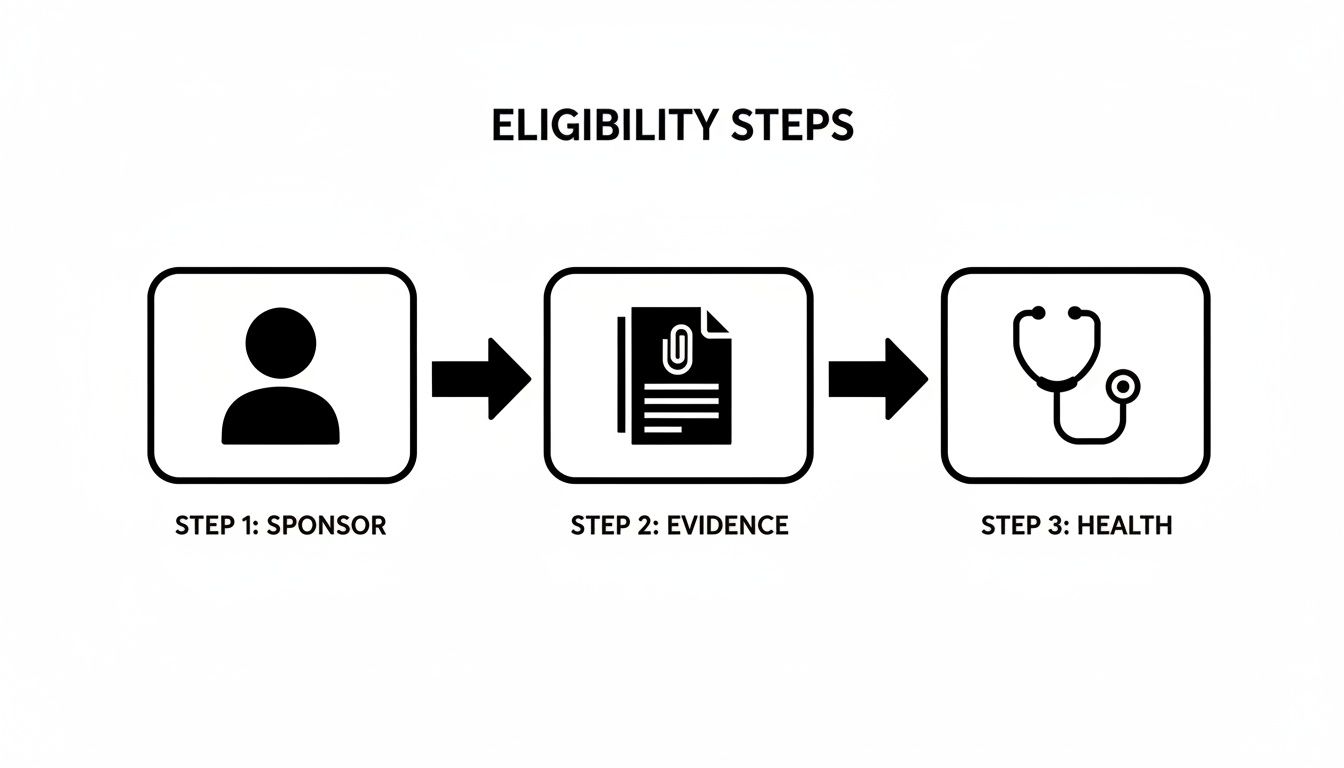
Partner Streams And Offshore Processing
Onshore and offshore partner streams run side by side. Think of it as planning two weddings—one at home, one abroad—and making sure they sync up.
Key stages include:
-
Sponsorship lodgement
-
Relationship and supporting evidence
-
Health and character checks
Keep your marriage date, travel plans and visa timelines in step. That way, you avoid surprises when the final decision lands.
Bridging Visas and Travel Arrangements
Applying for the right bridging visa is like fitting a safety net under a tightrope walker. It keeps your Subclass 300 application active and lets you hop in and out of Australia without a hitch.
Before you book your flights, pause to consider your interview dates and personal commitments. That way, you won’t end up stuck offshore or forced to rush back at the last minute.
Choosing The Right Bridging Visa
-
Bridging Visa A: Ideal if you need conditional re-entry while your offshore Subclass 300 application is in the queue.
-
Bridging Visa C: Works well for short tourist-style visits but comes with extra conditions you’ll need to satisfy.
-
Always review your visa grant letter for exact travel windows and any special instructions.
The Prospective Marriage visa grants a nine-month window to enter Australia and marry your sponsor, after which you may apply onshore for the Partner (Provisional) subclass 820 and ultimately the permanent subclass 801; this nine-month conditional travel period is codified in the subclass 300 rules and is repeatedly cited in departmental and migration-law guidance. Learn more about this period on Ethos Migration.
If you need a quick getaway outside your Subclass 300 arrangements, check out Tourist Visa Options.
Cost Breakdown And Budget Planning
Jumping into the Prospective Marriage Visa (Subclass 300) process without a clear budget is a bit like setting off on a road trip without checking your fuel gauge. You need a full picture of every expense to avoid nasty surprises down the track.
The primary visa charge sits at AUD 9,365, as set by Home Affairs. But that headline figure only tells part of the story.
When you factor in extras—health examinations, police clearances, biometrics, document translations and professional advice—the total often rises to AUD 10,000–15,000. Picture each cost as a stepping stone: miss one and your pathway could stall.
For more on upcoming fees and policy shifts, take a look at our deep dive on Australia’s 2025 visa changes.
Visa Cost Breakdown Table
Below is a straightforward breakdown of the main fees you’ll encounter on your Subclass 300 journey. Use these figures as a starting point when gathering quotes from health practitioners, translators and migration agents.
| Fee Type | Estimated Cost (AUD) |
|---|---|
| Visa application fee | 9,365 |
| Health check | 300 |
| Police clearance | 100 |
| Biometrics | 240 |
| Document translations | 150 |
| Agent fees | 2,500 |
Keep in mind these numbers can fluctuate based on service providers and timing. Treat this table as a budgeting scaffold rather than a fixed bill.
Budgeting Tips
-
Open a dedicated savings account early to ring-fence your visa funds
-
Track expenses monthly—small costs add up quicker than you think
-
Shop around for competitive quotes on medicals and translations
-
Factor in currency fluctuations if you’re paying from overseas
With a clear cost map in hand, you’ll navigate the Subclass 300 process with far greater confidence.
Common Mistakes And How To Avoid Them
Core Relationship Evidence
Missing your joint bank statements, dated photos or travel itineraries can derail an application. These documents form the narrative that proves your partnership is genuine.
Health And Character Requirements
Delaying your medical exam or police certificate is a fast track to hold-ups. Book your medical exams early and lodge your police clearances as soon as possible.
Forms And Declarations
Even a small typo or missing signature can trigger a request for more information. Before lodgement:
-
Double-Check Every Field: Names, dates and addresses must match.
-
Verify Sponsor Declarations: Ensure the sponsor’s details align perfectly with yours.
Communication Gaps
Slow replies to your case officer’s questions often end in refusal. Treat every email or phone call as urgent and respond promptly.
Early preparation and crystal-clear documentation will boost your approval chances.
Finally, build a simple master checklist. Tick off each item methodically to avoid those easy oversights.
Frequently Asked Questions
What Processing Times Can I Expect For Subclass 300?
On average, decisions land in 15–18 months. Complex files—think additional health or character checks—can extend up to 24–28 months.
Can I Enter Australia Multiple Times On This Visa?
Absolutely. You can exit and return freely during the nine-month validity period. Just be sure your first entry and marriage happen before that window closes.
How Do I Transition From Subclass 300 To 820 And 801?
Once you marry within nine months, lodge your onshore Partner (Provisional) Subclass 820 visa. After meeting health, character and relationship requirements, you’ll qualify for Subclass 801 permanent residency.
When Should I Consult A Registered Migration Agent?
If you’ve faced a prior refusal, are juggling tight timelines or aren’t sure what evidence to gather, engaging a MARA-registered agent can save you time and stress. They’ll help you build a watertight application and guide you through every deadline.
Contact My Visa Guide for free expert help today at https://www.myvisaguide.com.au