IMPORTANT NOTICE
Right then, let's dive into one of Australia's most talked-about work visas. If you're a skilled professional looking to work Down Under, or an Australian business struggling to find local talent, the Subclass 482 visa is likely on your radar. So, what's it all about?
Think of the Temporary Skill Shortage (TSS) visa, or Subclass 482, as a bridge. It connects Australian employers who have critical skill gaps with talented workers from around the globe. It’s a temporary work visa, but for many, it's also the first major step toward a new life in Australia and a potential pathway to permanent residency.
Disclaimer: Immigration laws and visa requirements are subject to frequent changes. The information provided here may no longer be current when you read it. For the most accurate and personalised advice, we strongly urge you to book an appointment with a registered migration agent. For any Department of Home Affairs fees, always refer to the official website at https://www.homeaffairs.gov.au/.
Your Essential Guide to the Subclass 482 Visa

The Subclass 482 visa stepped in to replace the old 457 visa back in 2018, and it has since become a cornerstone of Australia's skilled migration program. At its core, its purpose is to keep the Aussie economy ticking by allowing businesses to sponsor qualified international professionals for a set period—up to four years, depending on the visa stream.
To make sense of it all, you first need to understand that the 482 visa isn't a one-size-fits-all solution. It's cleverly split into three different streams, each designed for specific occupations and goals. Getting your head around these pathways is the first piece of the puzzle.
The Three Streams of the 482 Visa
The visa is broken down into three main categories, and the one you apply for depends entirely on the nominated occupation.
- Short-Term Stream: This is for jobs on the Short-term Skilled Occupation List (STSOL). As the name suggests, it’s designed for temporary skill gaps, usually granting a visa for up to two years.
- Medium-Term Stream: This one is for occupations considered critical for the country's future, listed on the Medium and Long-term Strategic Skills List (MLTSSL). It offers a visa for up to four years and, importantly, a much clearer pathway to permanent residency.
- Labour Agreement Stream: This is the most specialised pathway. It’s for employers who have negotiated a bespoke agreement with the Australian government to bring in workers for niche roles that aren't on the standard occupation lists.
TSS 482 Visa Streams At a Glance
To make it easier to see the differences, here’s a quick side-by-side comparison.
| Feature | Short-Term Stream | Medium-Term Stream | Labour Agreement Stream |
|---|---|---|---|
| Occupation List | Short-term Skilled Occupation List (STSOL) | Medium and Long-term Strategic Skills List (MLTSSL) | As per the specific labour agreement |
| Visa Duration | Up to 2 years (or 4 if an ITO applies) | Up to 4 years | As per the specific labour agreement (up to 4 years) |
| Permanent Residency Path | Limited pathway (possible under specific criteria) | Yes, generally after 2 years with the same employer | Yes, pathway is defined within the agreement |
| Number of Renewals | Generally one onshore renewal | Can be renewed multiple times onshore | Varies based on the terms of the agreement |
This table gives you a snapshot, but of course, the devil is in the details for each stream.
The demand for this visa is a testament to its importance. By March 2025, a massive 63,700 applications had been lodged—that’s a 53% jump from the previous year. With 110,740 people currently in Australia on a 482 visa, it's clear this visa is a vital channel for bringing skills into the country and a popular bridge to permanent options like the Employer Nomination Scheme (186) visa.
For employers, sponsoring a worker is just one piece of the puzzle; you also need a company culture that can attract global talent in a competitive market. And for a broader view on how this visa fits into the bigger picture, check out our comprehensive guide to Australia's skilled migration program.
Disclaimer: Immigration laws and visa requirements are subject to frequent changes. The information provided here may no longer be current when you read it. For the most accurate and personalised advice, we strongly urge you to book an appointment with a registered migration agent. For any Department of Home Affairs fees, always refer to the official website at https://www.homeaffairs.gov.au/.
Understanding the Three Different Visa Streams

Before diving into the 482 visa, you first need to get your head around a critical choice. This isn't a one-size-fits-all visa; it's broken down into three distinct "streams," each tailored for different jobs, different timeframes, and different long-term goals.
Picking the right stream from the get-go is everything. It's the first and most important decision for both the employer and the visa applicant because it dictates how long the visa lasts and what the future options for permanent residency look like.
Think of it like choosing a lane on a highway. One is a short-term exit, another is a long-haul route to a new destination, and the third is a special-access road built for a specific purpose. You've got to be in the right lane for your journey.
The Short-Term Stream
First up is the Short-Term stream. This one is pretty self-explanatory. It’s built for employers who need to fill a skills gap with an occupation on the Short-term Skilled Occupation List (STSOL). Essentially, it's a fix for an immediate, but not necessarily permanent, staff shortage.
A visa in this stream usually lasts for up to two years. While you can often renew it once onshore for another couple of years, it traditionally has very limited pathways to permanent residency. It’s the perfect fit for roles that are in high demand right now but might not be in a few years.
The Medium-Term Stream
This is the one most skilled professionals have their eyes on. The Medium-Term stream is the main pathway for people looking to build a genuine, long-term career in Australia. It covers jobs that are considered vital for the country's economic future, all listed on the Medium and Long-term Strategic Skills List (MLTSSL).
The big drawcard here is the visa length—you can get up to four years. Even better, it offers a clear and direct route to permanent residency. Typically, after working for your employer for a few years, you can transition to the Employer Nomination Scheme (Subclass 186) visa. This makes it a fantastic option if you're looking for stability and a permanent place to call home.
The Labour Agreement Stream
Finally, we have the Labour Agreement stream. This is the most specialised and least common of the bunch. It’s for situations where the standard occupation lists just don't cut it. It operates through a custom arrangement negotiated directly between an employer and the Department of Home Affairs.
This stream is used to plug unique or massive skill shortages where the standard visa rules aren’t practical. It allows businesses to bring in workers for jobs that aren't on the other lists or to get special concessions on the usual visa requirements.
Think of a Labour Agreement as a custom-built visa solution. It's tailored for specific industries or large-scale projects where standard visa criteria might not be suitable, providing a flexible framework to meet very particular workforce needs.
Each of these streams has its own rulebook, its own occupation list, and its own set of possibilities for the future. The choice isn't up to the applicant; it's dictated by the job the employer is nominating. Getting this right from the start shapes the entire visa journey, all the way from the initial application to a potential life in Australia.
Disclaimer: Immigration laws and visa requirements are subject to frequent changes. The information provided here may no longer be current when you read it. For the most accurate and personalised advice, we strongly urge you to book an appointment with a registered migration agent. For any Department of Home Affairs fees, always refer to the official website at https://www.homeaffairs.gov.au/.
Nailing the Eligibility Criteria: A Two-Way Street
Getting a Subclass 482 visa isn't a one-sided affair. Think of it as a partnership where both the skilled professional and the sponsoring business have to meet their end of the bargain. For the application to get the green light, both you and your employer must tick all the right boxes for the Department of Home Affairs.
This dual-check system is what protects the integrity of the visa program. It makes sure that you, the applicant, are genuinely skilled for the role, and that the employer has a real, documented need for someone with your specific expertise. Let's break down exactly what's expected from each side.
What's Required from You, the Visa Applicant
As the skilled professional, your part of the deal is to prove you’ve got the right qualifications, experience, and personal background for the job. It’s about more than just having a job offer—you need to show you’re the real deal.
Here are the core requirements you'll need to satisfy:
- Real-World Work Experience: You must have at least two years of full-time, relevant work experience under your belt. This generally needs to be from the last five years and in your nominated occupation (or something very similar).
- Skills and Qualifications: If your job requires specific licences, registrations, or qualifications to be performed in Australia, you must hold them. For some occupations, you might also need a formal skills assessment from a designated authority to validate your credentials.
- English Language Skills: You’ll need to prove you have a competent grasp of English. This is usually done by hitting a minimum score on an approved test like IELTS, PTE Academic, or TOEFL iBT.
- Health and Character Checks: Like anyone applying for an Australian visa, you have to meet strict health and character standards. This involves a medical check-up and providing police clearance certificates from countries you've lived in. To get a better handle on this, check out our detailed guide to Australia's health and character requirements.
What's Required from Your Sponsoring Employer
For an Australian business, sponsoring a worker involves more than just a handshake and a job offer. They have to prove to the government that they have a genuine need for an overseas worker and that they’re a legitimate, reputable employer.
This boils down to three key steps:
- Become a Standard Business Sponsor (SBS): First things first, the business must apply to become an approved sponsor. This confirms they are a lawfully operating business with a solid track record.
- Test the Local Labour Market (LMT): The employer must show they’ve genuinely tried—and failed—to find a suitable Australian citizen or permanent resident for the job. This usually means advertising the role across Australia for a set period.
- Meet Salary and Employment Standards: Your employer must pay you the going rate, known as the Annual Market Salary Rate (AMSR), and ensure it’s no lower than the government-set minimum, the Temporary Skilled Migration Income Threshold (TSMIT).
The 482 visa is a cornerstone of Australia's strategy to fill critical workforce gaps. Recent data shows a massive trend, with approvals for trades and technicians projected to jump by 82% to 9,170 by early 2025. This signals a clear focus on plugging skills shortages in key industries like health, ICT, and construction.
While Australia's permanent migration program for 2025-26 is capped at 185,000 places, with 44,000 of those reserved for employer-sponsored visas, the 482 visa itself is uncapped. This makes it an incredibly vital and flexible pathway for employers needing to bring in talent. Learn more about Australia's 2025-26 migration program and its implications.
Disclaimer: Immigration laws and visa requirements are subject to frequent changes. The information provided here may no longer be current when you read it. For the most accurate and personalised advice, we strongly urge you to book an appointment with a registered migration agent. For any Department of Home Affairs fees, always refer to the official website at https://www.homeaffairs.gov.au/.
How the 482 Visa Application Process Actually Works
Applying for the 482 visa isn't just a single form you fill out; it's a three-act play. Each stage has to be completed successfully before the next one can begin. If any step fails, the whole process grinds to a halt. For both the employer and the applicant, understanding this sequence is absolutely non-negotiable.
Think of it like building a house. You can't start putting up the walls until you've poured a solid foundation, and the roof certainly can't go on first. The 482 visa follows this exact same logic. It all starts with the employer, then moves to the specific job, and only then does the spotlight turn to you, the visa applicant.
Stage 1: The Sponsorship Application
The journey begins with the employer. Before a business can even entertain the idea of bringing someone in from overseas, it must first get the green light from the Australian government to become a Standard Business Sponsor (SBS). This is the foundation of the entire application.
To get this approval, the business needs to prove it’s a legitimate, legally established company that is actively trading in Australia. The government wants to see a real business with a solid track record. Once approved, this sponsorship status usually lasts for five years, giving the business a window to nominate several skilled workers if needed.
Stage 2: The Nomination Application
Once the business is an approved sponsor, they can move on to stage two: nominating the specific role they need to fill. This is where the company formally makes its case to the Department of Home Affairs, explaining exactly why they need to hire a skilled worker from overseas.
This stage has a few critical moving parts:
- Defining the Role: The employer has to pinpoint the occupation and match it to an eligible code on the relevant skilled occupation list.
- Labour Market Testing (LMT): For most positions, the business has to show they’ve genuinely tried—and failed—to find a suitable Australian to do the job. This means providing hard evidence of recent job ads.
- Meeting Salary Rules: The proposed salary must meet the Annual Market Salary Rate (AMSR) and be higher than the Temporary Skilled Migration Income Threshold (TSMIT).
This flowchart breaks down who is responsible for what, showing the clear divide between the employer's tasks and the applicant's.
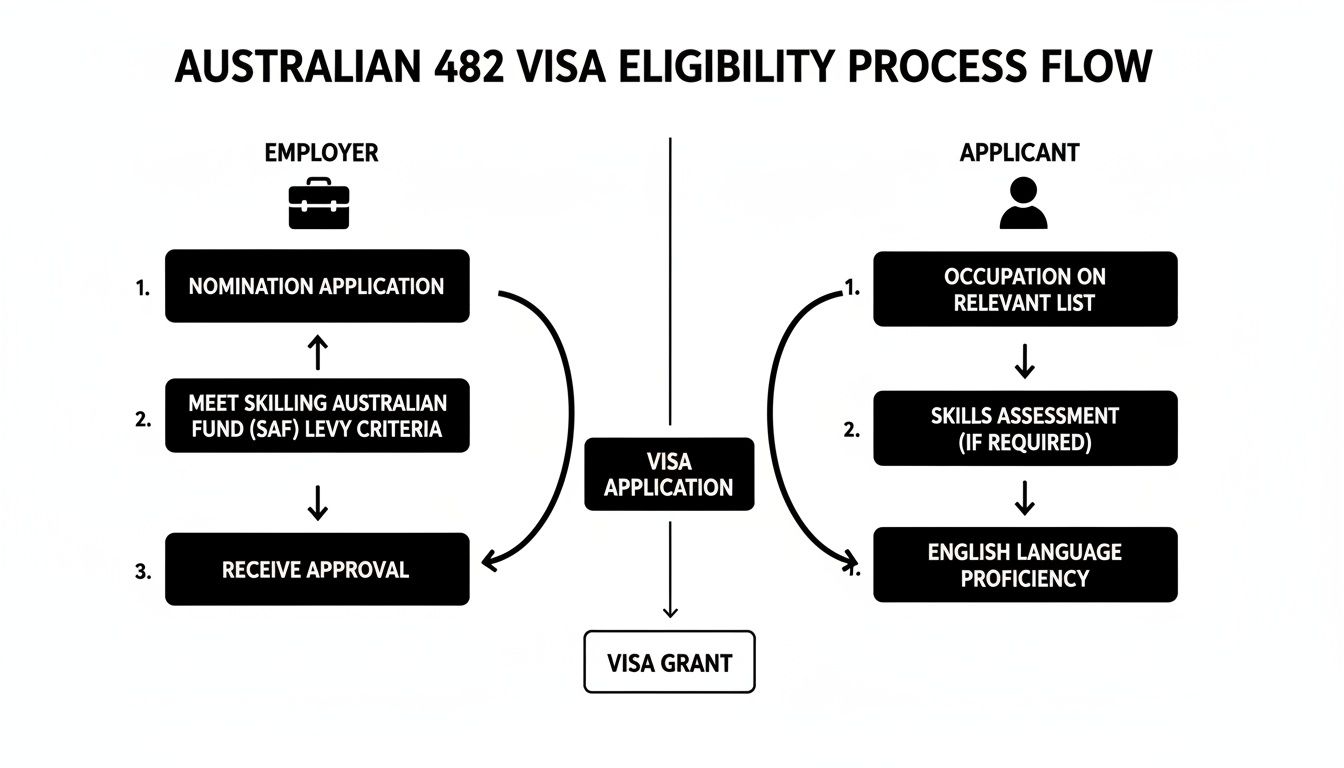
As you can see, the two tracks run in parallel, but the employer's side must be in order before the applicant's visa has any chance of being granted.
Stage 3: The Visa Application
Only when the sponsorship and nomination are lodged (and often approved) does the focus finally shift to you. This is the last and most personal stage, where you submit all your documents to prove you’re the right person for the job and meet the visa requirements.
You’ll need to pull together evidence of your skills, qualifications, relevant work history, and English language ability. You'll also need to pass the standard health and character checks. This is your moment to demonstrate that you tick all the boxes for the position your sponsor has nominated.
A meticulously prepared application here is the key to a smooth and quick decision. Of course, none of this can happen without a sponsor. If you're still looking for one, it's worth exploring different strategies to find recruiters who can get you a job and connect with Australian employers.
Disclaimer: Immigration laws and visa requirements are subject to frequent changes. The information provided here may no longer be current when you read it. For the most accurate and personalised advice, we strongly urge you to book an appointment with a registered migration agent. For any Department of Home Affairs fees, always refer to the official website at https://www.homeaffairs.gov.au/.
Getting Real About Costs, Timelines, and What's Next
Alright, let's talk about the practical side of things: money and time. When you're looking at a 482 visa, you need a clear picture of the financial and time commitments involved. It’s not just one fee; it’s a series of government charges and processing timelines that both you and your employer need to be ready for.
Think of it as a shared investment. The sponsoring employer and you, the visa applicant, each have specific costs you're responsible for at different stages of the game.
A Breakdown of 482 Visa Costs
The financial puzzle has a few key pieces, and the employer usually covers the initial, hefty ones.
- Sponsorship Fee: First up, the business has to become a Standard Business Sponsor (SBS), and that comes with its own fee.
- Nomination Fee: For every job they want to fill with an overseas worker, the employer pays another charge to nominate the position.
- Skilling Australians Fund (SAF) Levy: This is a big one for the employer. The cost depends on the business's annual turnover and how long your visa will be. The money goes towards training programs for Australian workers.
- Visa Application Charge (VAC): This is the main fee you'll pay when you lodge your application. The final amount changes depending on which stream you're in and if you're bringing family members along.
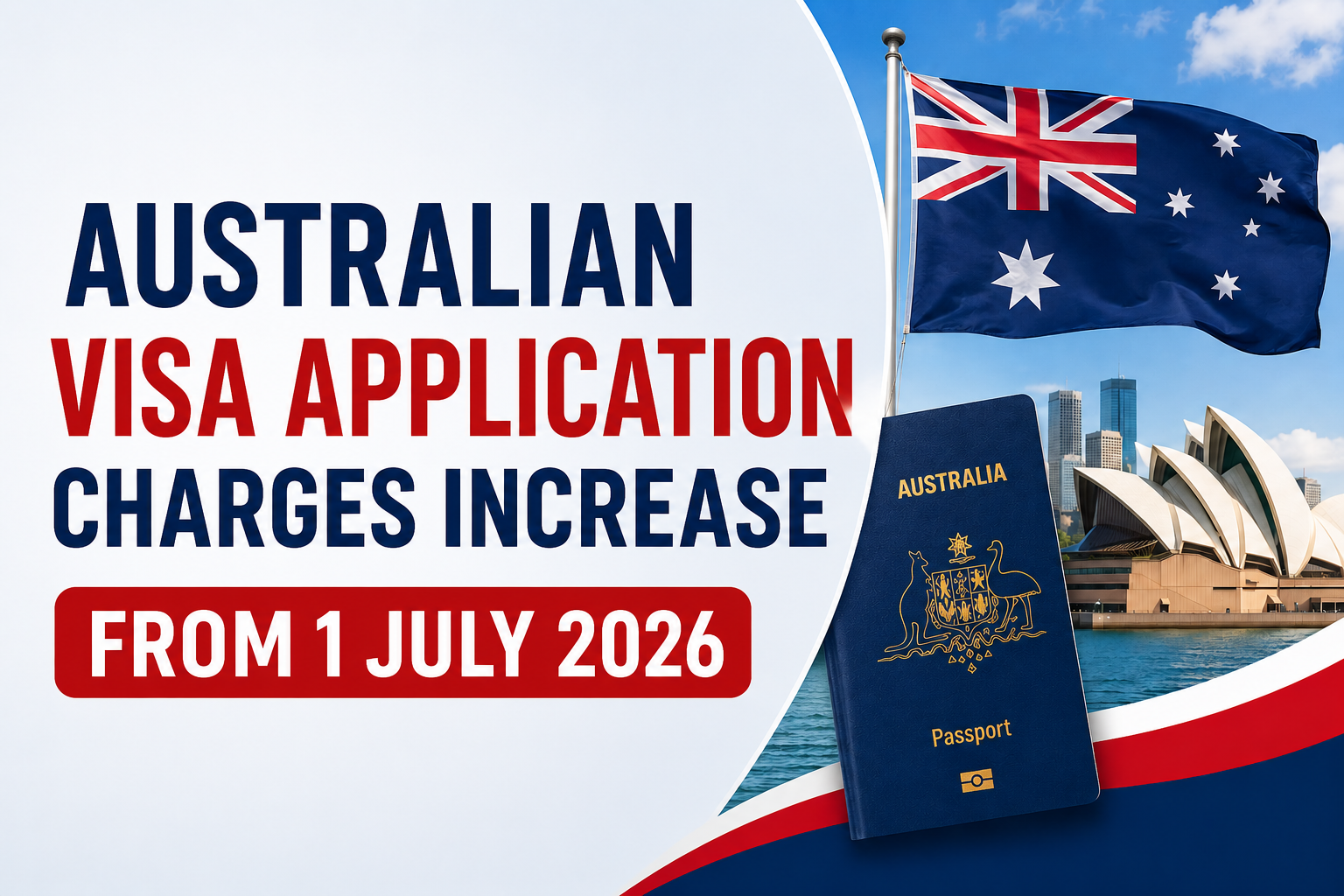
Keep in mind, these government fees are set in stone and usually get reviewed (and often increased) each year.
Disclaimer: Immigration laws and visa requirements are subject to frequent changes. The information provided here may no longer be current when you read it. For the most accurate and personalised advice, we strongly urge you to book an appointment with a registered migration agent. For any Department of Home Affairs fees, always refer to the official website at https://www.homeaffairs.gov.au/.
How Long Will It Actually Take?
"How long will it take?" It's the million-dollar question, and honestly, there's no single answer. Processing times for the 482 visa can swing wildly depending on a few things: how complete your application is, which stream you've applied for, and what the Department of Home Affairs is prioritising at that moment.
One thing is for sure: a well-prepared, "decision-ready" application will almost always get through the system faster. Missing documents or fuzzy information? That’s a surefire recipe for delays. The government posts estimated processing times on its website, which can give you a ballpark figure, but treat them as a guide, not a guarantee.
The Future is Here: The Skills in Demand Visa
Big changes are on the horizon for Australia's employer-sponsored visa program. The government has announced that the Subclass 482 visa is set to be replaced by a new 'Skills in Demand' visa by 2026. This isn't just a name change; it's a whole new three-tiered system designed to better target Australia’s real skill shortages.
What’s the headline? This new visa is expected to slash the work experience requirement from two years down to just one for its 'Specialist Skills', 'Core Skills', and 'Essential Skills' pathways. This is a massive shift aimed at making Australia a more attractive destination for global talent, especially in booming sectors like tech, healthcare, and construction, where 71% of spots in the permanent migration program are being directed. For the 110,000+ current 482 visa holders, this reform could also open up simpler pathways to permanent residency. It’s a real game-changer.
You can get more insights on these upcoming Australia work permit changes on woodlandhealthcaretraining.com.
The Pathway From a Temporary Visa to Permanent Residency
For so many skilled professionals, the Subclass 482 visa isn't just a temporary work pass—it's the first real step on a journey to calling Australia home for good. This visa was created to do more than just plug urgent skill gaps; it’s designed to be a critical stepping stone to permanent residency (PR) for people in the right occupations. Getting your head around this pathway is the key to mapping out your long-term future Down Under.
The most well-trodden path from a temporary 482 visa to PR is through the Employer Nomination Scheme (Subclass 186) visa. More specifically, it’s the Temporary Residence Transition (TRT) stream of the 186 visa that was built for 482 visa holders who have worked with their sponsor for a few years and are ready to put down permanent roots.
The Temporary Residence Transition (TRT) Stream
You can think of the TRT stream as a nod to your hard work and commitment. By showing up and doing the hard yards for your sponsoring employer in your nominated role, you prove just how valuable you are to Australia's workforce and economy. After a certain amount of time, your employer can then nominate you for a permanent 186 visa, officially transitioning you from a temporary to a permanent resident.
Generally, to be eligible, you need to have:
- Worked full-time in Australia for your sponsoring employer for at least two of the last three years.
- Held a 482 visa while doing so.
- An offer from your employer for a permanent position in that same role.
For a long time, this pathway was really only open to people on the Medium-Term stream of the 482 visa. But thankfully, recent policy changes have kicked open some new doors, creating some fantastic opportunities for a much broader group of skilled workers.
New Hope for Short-Term Stream Holders
In what was a massive (and very welcome) development, the government has now expanded the PR pathways to include 482 visa holders on the Short-Term stream. This change finally acknowledges the crucial role these professionals play in our economy and gives them the same shot at permanency as their Medium-Term counterparts.
This policy shift is a total game-changer. It means that it no longer matters whether your job is on the short-term or medium-term list. You now have a clear potential path to permanent residency through the TRT stream, as long as you meet the work experience and other criteria.
This update brings a lot more certainty and a clearer future for thousands of skilled workers who were previously in limbo. It creates a more inclusive and sensible framework, allowing talented people to build a lasting life in Australia. If you want to take a deeper dive into the different routes available, you can learn more about Australia's permanent residency pathways in our detailed guide.
Disclaimer: Immigration laws and visa requirements are subject to frequent changes. The information provided here may no longer be current when you read it. For the most accurate and personalised advice, we strongly urge you to book an appointment with a registered migration agent. For any Department of Home Affairs fees, always refer to the official website at https://www.homeaffairs.gov.au/.
Your 482 Visa Questions Answered
When you get down to the nitty-gritty of the Subclass 482 visa, it's natural for a lot of specific questions to pop up. Whether you're a skilled professional planning your move or a business looking to bring in talent, a few "what if" scenarios always come to mind.
Let's walk through some of the most common questions we hear from clients. Getting these details right from the start can save you a world of stress down the track.
Can I Bring My Family With Me on a 482 Visa?
Yes, you absolutely can. The 482 visa allows you to include members of your family unit in your application, which typically means your partner and any dependent children.
If your visa is granted, they’ll usually get a visa for the same length of time and with similar conditions as yours. This is a huge plus, as it means they'll have full rights to work and study in Australia while you're here.
What Happens If I Lose My Sponsored Job?
Losing your job doesn't mean you have to pack your bags and leave Australia the next day. The rules give you a bit of breathing room.
You generally have 60 days from your last day of employment to sort things out. In that time, your main options are to find another approved employer to take over your sponsorship, apply for a completely different visa, or make arrangements to depart the country. The key is to act fast and have a plan.
Is it Possible to Change Employers on a 482 Visa?
You can, but it’s not as simple as just handing in your notice and starting somewhere new. There's a formal process you have to follow to stay compliant.
Your new prospective employer must already be an approved Standard Business Sponsor, and they need to lodge a new nomination for your role.
Crucially, you can only legally start working for the new company after their nomination has been approved by the Department of Home Affairs. Jumping the gun and starting work before that approval comes through is a major breach of your visa conditions.
What Are the Common Reasons a 482 Visa Gets Refused?
Unfortunately, refusals do happen, and they often come down to a few common mistakes. Some of the most frequent pitfalls we see are:
- The applicant can't properly prove they have the required two years of relevant work experience.
- The employer’s Labour Market Testing (LMT) evidence wasn't done correctly or is missing key details.
- The Department isn't convinced that the job being offered is a genuine position within the business.
- The application was simply incomplete or contained incorrect information.
Navigating the complexities of the 482 visa, from eligibility to pathways for permanent residency, requires expert guidance. At My Visa Guide, our registered migration agents provide clear, accurate advice to ensure your application is strong and compliant.
For personalised assistance with your Australian visa journey, book a consultation with us today at https://www.myvisaguide.com.au.
Disclaimer: Immigration laws and visa requirements are subject to frequent changes. The information provided here may no longer be current when you read it. For the most accurate and personalised advice, we strongly urge you to book an appointment with a registered migration agent. For any Department of Home Affairs fees, always refer to the official website at https://www.homeaffairs.gov.au/.